Why Your Pool Water Turns Green and What to Check First
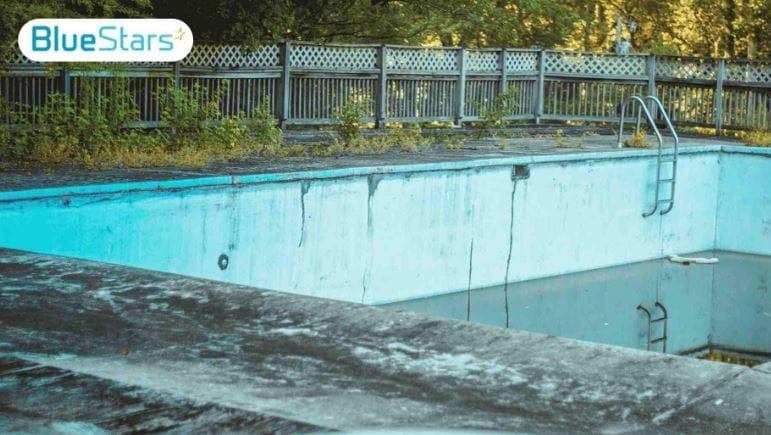
Green pool water can be frustrating, especially when it seems to happen quickly after a few hot days or heavy pool use. In most cases, the green color comes from algae growth, low chlorine, poor filtration, or weak water circulation. The good news is that you can usually narrow down the issue by checking the water chemistry, filter condition, and pool equipment first. This guide will walk you through the most common causes of green pool water and what to inspect before the problem gets worse.
1. What green pool water usually means
Green pool water usually means algae has started growing in the pool. Algae can appear when the chlorine level drops too low, the filter is not running long enough, or the water is not circulating properly. Sometimes, the water may look light green and slightly cloudy. Other times, it can turn dark green with slippery pool walls and floor. The darker the water looks, the longer algae has likely been growing.
Green water does not always mean one single issue. It often happens because water chemistry and pool equipment are not working together properly. For example, you may add chlorine, but if the filter is dirty or circulation is weak, the pool can still stay green.
2. Common causes of green pool water
Several problems can cause pool water to turn green. Checking these areas first can help you decide what to fix before spending more time or money.
Low chlorine level
Chlorine helps kill algae and bacteria in pool water. When chlorine drops too low, algae can grow quickly, especially in warm weather. This can happen after heavy rain, high temperatures, strong sunlight, or frequent swimming. If your pool looks green, testing the chlorine level should be one of the first steps.
Poor filtration
Your pool filter removes dirt, debris, and small particles from the water. If the filter is not running long enough each day, algae and debris can build up faster than the system can remove them. Poor filtration can also make the water look cloudy even after you add chemicals. In many cases, the pool needs both proper chemical treatment and enough filter run time to clear up.
Inefficient filtration can result in cloudy water and promote algae growth (Source: Unsplash)
Clogged or dirty filter
A dirty filter can reduce water flow and make the whole system less effective. When water cannot pass through the filter properly, algae, dirt, and debris stay in the pool longer. Depending on your pool system, you may need to rinse, backwash, clean, or replace the filter media. If the pressure gauge is higher than normal or the return flow feels weak, the filter may be clogged.
Poor water circulation
Even if the water chemistry is correct, poor circulation can leave “dead spots” where algae grows more easily. These areas are often found around corners, steps, ladders, or behind pool fixtures. Weak circulation may come from a pump issue, clogged skimmer basket, blocked return line, dirty filter, or poor jet direction. If some parts of the pool stay cloudy or green while others look clearer, circulation may be part of the problem.
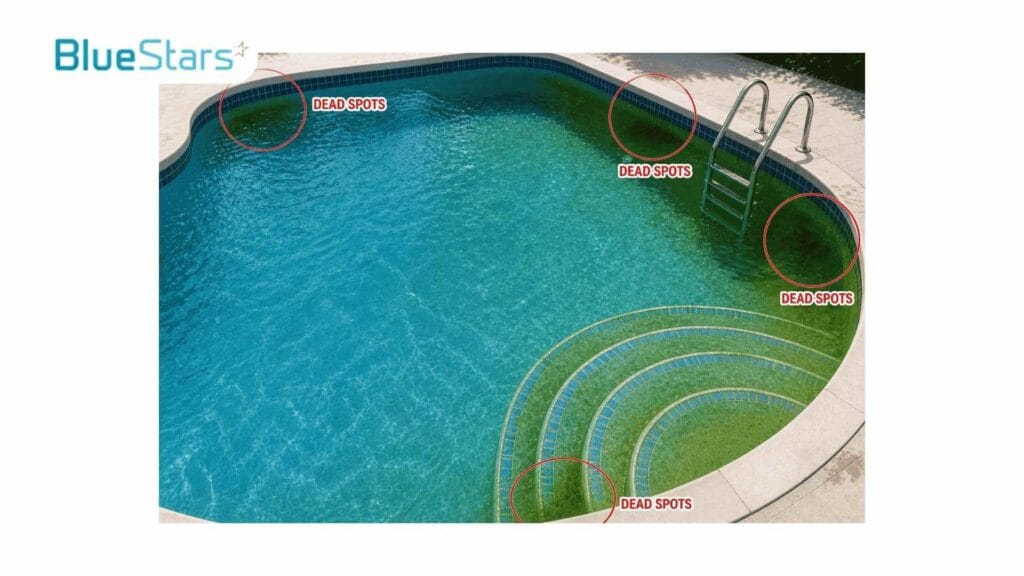
When water circulation is uneven, debris can accumulate in “dead spots” (Source: Bluestars Parts)
Warm weather and heavy pool use
Algae grows faster in warm water. Heavy pool use can also lower chlorine faster because sunscreen, sweat, dirt, and organic matter enter the water. During hot weather or busy swim days, your pool may need more frequent testing, longer filtration time, and stronger maintenance habits to stay clear.
3. How to start clearing green pool water
Before you start, it helps to understand the basic steps for how to fix green pool water so you can treat both the algae and the equipment issues behind it.
- Step 1 – Test the pool water: Check the chlorine, pH, and alkalinity levels first. If chlorine is too low, algae can keep growing even when the filter is running.
- Step 2 – Brush the pool surfaces: Brush the walls, steps, corners, and floor to loosen algae. Focus on slippery spots or darker green areas where algae may be more concentrated.
- Step 3 – Run the pool filter longer than usual: After brushing, run the filter continuously or for an extended period. Green pool water often needs extra filtration time to remove dead algae and cloudy particles.
- Step 4 – Shock the pool if needed: If chlorine is very low or algae growth is heavy, use pool shock to raise the chlorine level quickly. Always follow the product label and wait until the water is safe before swimming again.
- Step 5 – Recheck the water and filter condition: After treatment, test the water again and inspect the filter. If the water is still cloudy or green, the filter may need cleaning, backwashing, or more run time.
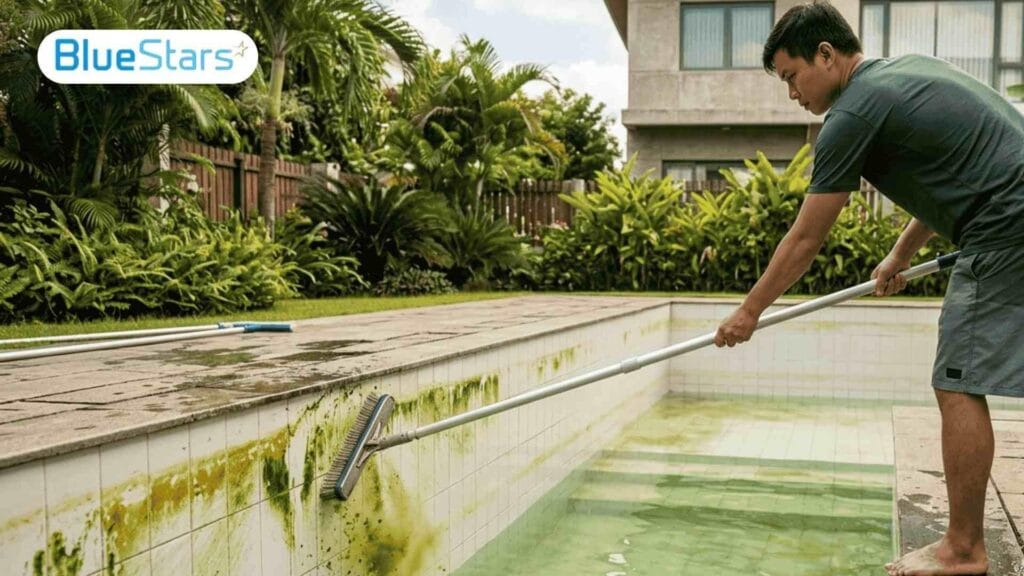
Brushing the pool thoroughly is essential to loosen algae so chemicals and filtration can work effectively (Source: Bluestars Parts)
4. How to prevent green pool water from coming back
Once the pool is clear again, consistent maintenance is the best way to prevent algae from returning.
- Test pool water weekly, especially during hot weather.
- Keep chlorine within the recommended range.
- Clean or backwash the filter when needed.
- Brush pool walls, steps, and corners regularly.
- Empty skimmer and pump baskets before they become packed with debris.
- Check water circulation and make sure return jets are positioned properly.
- Inspect pool cleaner hoses, seals, and fittings for leaks or wear.
Small maintenance steps can prevent bigger algae problems later. If you notice repeated suction problems, leaks, weak cleaner movement, or poor filtration even after cleaning the system, it may be time to inspect your pool cleaner parts and replace any worn components.
Green pool water is a common issue, but it can be resolved when you address both the water chemistry and the pool equipment behind it. From testing chlorine and brushing pool surfaces to cleaning the filter and checking the cleaner, these simple steps can help your pool clear up faster and stay easier to maintain. If you are looking for quality replacement parts such as hoses, seals, filter parts, plugs, or valve components, consider BlueStars Parts to ensure compatibility and reliable performance for your pool system.
Contact information:
8 The Green, Ste A, Dover, Delaware 19901-3618, United States
Website: https://bluestarsparts.com/