The Ultimate Guide to Ant Control with Borax and Sugar: A Safe & Effective DIY Solution

Watching a trail of ants march through your kitchen can be frustrating. While store-bought sprays offer a quick fix, they often only kill the ants you see, leaving the colony to send more. For a truly effective solution, you need to target the heart of the problem: the colony and its queen.
This is where a powerful, natural, and inexpensive DIY method comes in: the borax and sugar ant bait. This guide will walk you through exactly how it works, why it’s so effective, and how to use it safely to reclaim your home.
Why Borax and Sugar is the Smart Choice for Ant Control
The genius of the borax and sugar method lies in its strategic approach. Instead of just repelling or killing on contact, it uses the ants’ own instincts against them.
“Most people see a line of ants and reach for a spray can,” says Dr. Eleanor Vance, an urban entomologist. “What they don’t realize is that they’re just treating the symptom. The forager ants you see are only a tiny fraction of the colony. The real power lies with the queen, hidden deep in the nest. A successful baiting system like borax and sugar is designed to be carried back to the nest, eliminating the source of the problem.”
The Science Behind the Bait: How It Works
- The Bait: You create a mixture of borax (the slow-acting insecticide) and sugar (the attractive food source).
- The Attraction: Worker ants, whose job is to find food, are drawn to the sweet sugar.
- The Deception: The ants can’t distinguish the borax from the sugar. They carry the lethal bait back to the nest, sharing it with the queen, larvae, and other colony members through a process called trophallaxis (mouth-to-mouth feeding).
- The Elimination: Borax interferes with the ants’ digestive systems and abrades their exoskeletons, ultimately leading to their demise. Because it acts slowly (typically over 24-48 hours), the foragers have enough time to return to the nest and poison the entire colony.
Borax vs. Other Common Ant Control Methods
How does this DIY method stack up against other popular solutions? The following table provides a clear comparison:
| Method | How It Works | Pros | Cons |
|---|---|---|---|
| Borax & Sugar Bait | Slow-acting poison is carried back to the nest. | – Eliminates the entire colony – Extremely inexpensive – Long-lasting effects – Uses common household ingredients | – Requires patience (takes 1-3 days) – Requires safety precautions around pets/children |
| Commercial Ant Sprays | Kills on contact through neurotoxins. | – Provides immediate, visible results | – Only kills visible foragers – Colony remains intact and will send more ants – Can contain harsh chemicals – Repellent can cause ants to scatter, creating new problems |
| Diatomaceous Earth | Powder that abrades the ant’s exoskeleton, causing dehydration. | – Natural and non-toxic to mammals – Effective physical barrier | – Only kills ants that cross the powder – Loses effectiveness when wet – Does not target the colony |
| Store-Bought Baits (Gels/Stations) | Pre-made bait with a slow-acting insecticide. | – Convenient and ready-to-use – Some are child-resistant | – Can be expensive – May not be as attractive as a fresh, homemade bait – Varying levels of effectiveness by brand |
As the table illustrates, the borax and sugar method is uniquely positioned for long-term, colony-level eradication.
How to Make and Use Your Borax Ant Bait: A Step-by-Step Guide
Creating your own ant bait is simple. You have two primary options: a solid bait and a liquid one. Ants can have varying preferences, so it’s often wise to set out both.
Recipe 1: The Solid Bait (Sugar & Borax Balls)
This is ideal for placing in small containers along ant trails.
Ingredients:
- 1 part Borax
- 3 parts Powdered Sugar (confectioner’s sugar)
Instructions:
- Mix the borax and powdered sugar thoroughly in a small bowl. The powdered sugar helps mask the grittiness of the borax.
- Add a few drops of water at a time until you can form the mixture into small, pea-sized balls.
- Place these balls on small pieces of cardboard or bottle caps and set them in areas where you’ve seen ant activity, but out of reach of pets and children.
Recipe 2: The Liquid Bait (Syrup)
This is highly attractive to sugar-loving ants and is perfect for cotton balls or shallow dishes.
Ingredients:
- 1.5 cups of Warm Water
- ½ cup of Sugar
- 1.5 Tablespoons of Borax
Instructions:
- Stir the warm water and sugar together until the sugar is completely dissolved.
- Add the borax and stir until it is fully dissolved.
- Soak cotton balls in the solution and place them in a shallow container (like a jar lid). Poke small holes in the lid of a plastic container to make a DIY bait station.
Strategic Placement is Key
“An ant bait is only as good as its placement,” notes John Miller, a veteran pest control technician. “You must place the bait directly in the path of the ants. Don’t clean them up or spray them when you see them on the bait. You want them to find it, take it, and bring it home. That’s the whole point. A little patience here pays off hugely.”
Crucial Safety Precautions
While borax is a natural mineral, it is not harmless. Follow these safety rules diligently:
- Keep Away from Children and Pets: Borax can be toxic if ingested in large quantities. Always place your bait stations in areas that are completely inaccessible to pets and children. Inside cabinets, under appliances, or behind furniture are good locations.
- Label Everything Clearly: Clearly label any containers you use to mix or store the bait.
- Wash Hands Thoroughly: Always wash your hands with soap and water after handling borax or your bait mixtures.
- Consider Pet-Safe Alternatives: If you have particularly curious pets, you may want to consider a different method, like diatomaceous earth, for high-traffic areas.
Frequently Asked Questions (FAQ)
Q: How long does it take for borax to kill an ant colony?
A: It typically takes 24 to 48 hours to see a significant reduction in ant activity, and up to a week for a large colony to be fully eliminated. The slow action is critical for success.
Q: Can I use boric acid instead of borax?
A: Yes, you can. Boric acid is a more refined chemical compound, while borax is a natural mineral salt that contains boric acid. For the purposes of ant bait, they are often used interchangeably with similar effectiveness.
Q: The ants aren’t taking my bait. What’s wrong?
A: Ants’ dietary preferences can change. If they are ignoring your sugar-based bait, they might be seeking protein. Try a protein-based bait by mixing 2 tablespoons of peanut butter with 1 teaspoon of borax.
Q: Where can I buy borax?
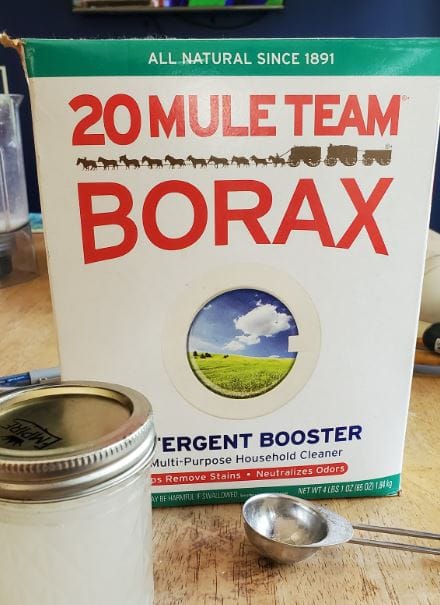
A: Borax (often sold under the brand name 20 Mule Team Borax) is readily available in the laundry aisle of most grocery stores, supermarkets, and big-box retailers.