How to Clean Pontoons with Vinegar: The Ultimate Eco-Friendly Guide
Meta Description: Stop scrubbing for hours. Learn the exact vinegar-to-water ratio to remove waterline stains, oxidation, and rust from aluminum pontoons. Includes a comparison table vs. chemical cleaners.
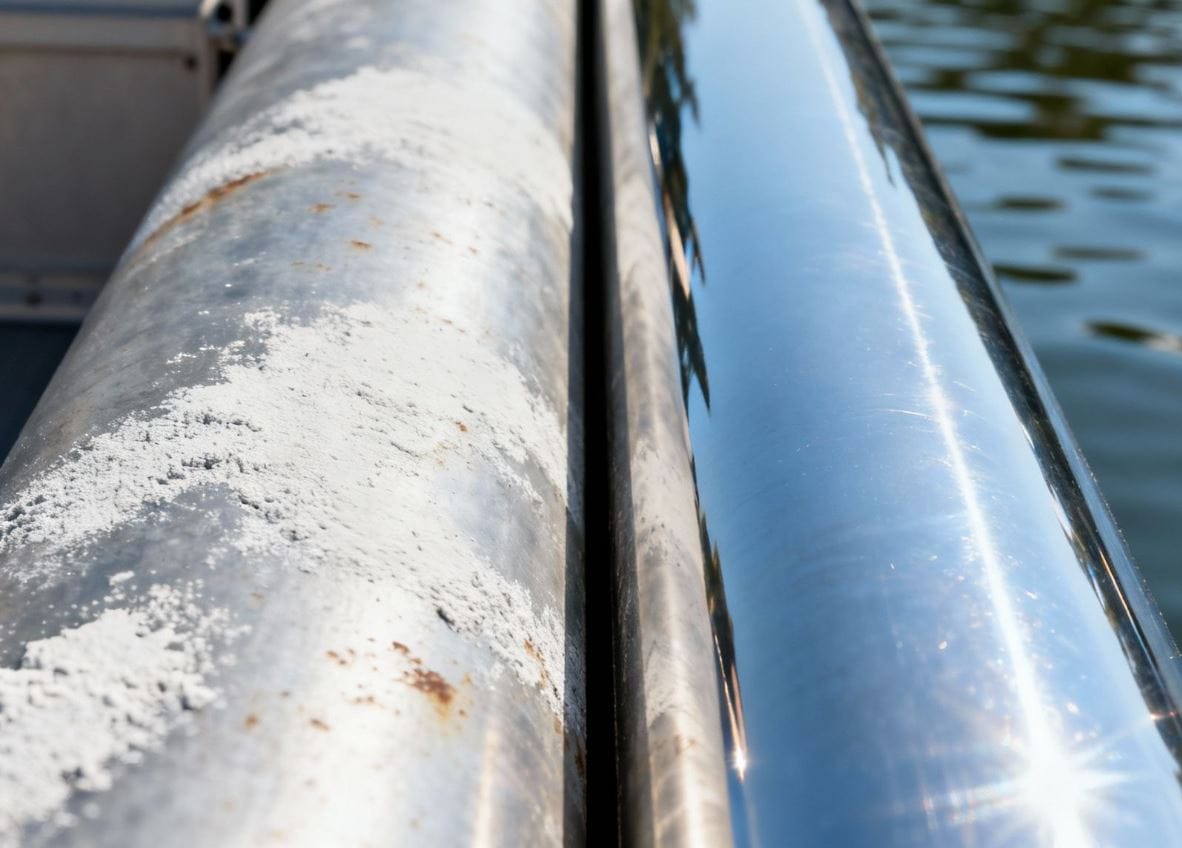
If you own a pontoon boat, you know the struggle: white, chalky oxidation, stubborn waterline scum, and light rust spots. While commercial acids work fast, they are expensive, toxic to aquatic life, and dangerous to handle.
Enter distilled white vinegar—a mild acetic acid solution that is safe, cheap, and surprisingly effective for light to moderate pontoon cleaning.
In this guide, you will learn:
- Why vinegar works on aluminum
- The exact mixing ratio
- A step-by-step cleaning process
- A comparison table: Vinegar vs. Chemical Cleaners
- What NOT to do (critical safety tips)
Why Use Vinegar on Aluminum Pontoons?
Vinegar (5% acetic acid) dissolves alkaline mineral deposits (calcium, lime, salt) and mild oxidation without corroding aluminum—provided you rinse it off promptly.
| Property | Vinegar (White Distilled) | Commercial Aluminum Cleaner |
|---|---|---|
| Acid strength | Mild (pH ~2.5) | Strong (pH <1.0) |
| Cost per gallon | $0.15 | $15–$30 |
| Safe for swimmers/plants | Yes (biodegradable) | No (toxic runoff) |
| Works on heavy scaling | No | Yes |
| Requires PPE (gloves/goggles) | Recommended | Mandatory |
| Rinse time window | 2–3 minutes | 5–10 minutes |
Best for: Light waterline stains, chalky oxidation, salt residue, and small rust blooms. Not for: Thick barnacles, heavy pitting, or 10-year-old neglect.
What You Will Need
- Distilled white vinegar (cheapest bulk jug from grocery store)
- Water (preferably deionized or tap if no hard minerals)
- Plastic spray bottle (never metal)
- Soft-bristle brush (nylon or horsehair—no steel wool)
- Microfiber towels or soft sponge
- Garden hose with spray nozzle
- Baking soda (for neutralization after cleaning)
- Car wax or aluminum sealant (for post-cleaning protection)
The Perfect Vinegar-to-Water Ratio
| Cleaning Job | Vinegar | Water | Method |
|---|---|---|---|
| Light waterline haze | 1 cup | 2 cups | Spray & wipe |
| Moderate oxidation / white chalk | 1 part | 1 part | Spray, dwell 60s, scrub |
| Stubborn calcium rings / rust blooms | Full strength (undiluted) | 0 | Spray, dwell 90s max, scrub |
| Preventive monthly wipe-down | 1 part | 4 parts | Spray & rinse immediately |
Pro tip: Always test on a small hidden area first (e.g., rear of the pontoon).
Step-by-Step: How to Clean Pontoons with Vinegar
Step 1: Lift or Trailer the Boat
Vinegar works best when the pontoons are dry and out of the water. Rinse off loose mud and algae with a hose.
Step 2: Prepare the Vinegar Solution
Mix your chosen ratio in a plastic spray bottle. Do not use a metal sprayer—vinegar corrodes steel and brass.
Step 3: Apply to a Small Section (3–4 feet)
Spray generously onto the pontoon. Let it sit for 60 seconds—no longer. Vinegar can etch aluminum if left over 2 minutes.
Step 4: Agitate with a Soft Brush
Scrub in circular motions. The white residue will turn into a gray slurry—that’s the oxidized aluminum and mineral scale lifting off.
Step 5: Rinse Immediately
Blast with a hose for at least 30 seconds. Do not let vinegar dry on the pontoon.
Step 6: Neutralize (Optional but Recommended)
Mix 2 tablespoons baking soda with 1 gallon of water. Sponge over the cleaned area to neutralize any remaining acid. Rinse again.
Step 7: Dry & Wax
Wipe dry with a microfiber towel. Apply a marine-grade aluminum wax to prevent rapid re-oxidation.
Vinegar vs. Popular Pontoon Cleaners (At a Glance)
| Cleaner | Effectiveness on Scale | Safety for Lake/River | Cost per Use | Time to Results |
|---|---|---|---|---|
| White Vinegar (50/50 mix) | ★★★☆☆ (good for light) | ★★★★★ (safe) | $0.10 | 2–3 min |
| ToonBrite (acid-based) | ★★★★★ (excellent) | ★★☆☆☆ (toxic) | $8.00 | 5 min |
| MaryKate On & Off | ★★★★★ (excellent) | ★★☆☆☆ (toxic) | $10.00 | 3 min |
| Baking soda paste | ★☆☆☆☆ (very mild) | ★★★★★ (safe) | $0.05 | 15 min |
| Pressure washer (only) | ★★☆☆☆ (streak risk) | ★★★★☆ (neutral) | $0.00 | 10 min |
Verdict: Use vinegar for weekly or monthly maintenance. Use strong acids once per season for heavy buildup.
3 Critical Mistakes to Avoid
❌ Mistake 1: Letting Vinegar Sit Too Long
Vinegar is acid. On aluminum, >2 minutes = etching, pitting, or dull gray spots. Always rinse within 90 seconds.
❌ Mistake 2: Mixing with Bleach or Ammonia
Never combine vinegar with bleach (creates toxic chlorine gas) or ammonia. Use only water.
❌ Mistake 3: Using on Painted or Anodized Pontoons
Vinegar strips coatings. If your pontoons are painted or have a clear coat, test first. For bare aluminum only.
When NOT to Use Vinegar
- Heavy marine growth (barnacles, zebra mussels) → Use a plastic scraper + commercial acid.
- Deep pitting corrosion → Sanding + barrier coat required.
- Saltwater-only boats with crevice corrosion → Consult a marine mechanic.
Final Verdict: Does Vinegar Really Work?
Yes, for routine care. Vinegar will not transform a neglected, black-stained pontoon into a mirror finish. But for boat owners who dock in freshwater or lightly brackish water, a monthly vinegar wipe-down keeps pontoons 80% cleaner than soap and water—for pennies.
Pro routine:
- Vinegar spray (50/50) → scrub → rinse
- Dry → apply spray wax (e.g., Sharkhide)
- Repeat every 4 weeks during boating season
Frequently Asked Questions
Can I use apple cider vinegar?
No. It contains sugars and impurities that leave a sticky residue. Use only distilled white vinegar.
Will vinegar remove the shine from pontoons?
If left on too long, yes. But if you rinse quickly, it restores the original mill finish by removing oxidation.
How do I clean pontoons without a pressure washer?
Vinegar + a long-handled soft brush works better than a pressure washer, which can dent thin aluminum.
Can I put vinegar in a pump sprayer?
Yes, but use a sprayer rated for chemicals. Rinse it thoroughly with water after each use.
Summary Table – Your Quick Reference
| Step | Action | Time |
|---|---|---|
| 1 | Mix 1:1 vinegar & water | 1 min |
| 2 | Spray 4-ft section | 10 sec |
| 3 | Wait 60 seconds | 1 min |
| 4 | Scrub with soft brush | 1 min |
| 5 | Rinse thoroughly | 30 sec |
| 6 | Neutralize with baking soda (optional) | 30 sec |
| 7 | Dry & wax | 5 min |
Total time for twin 20-ft pontoons: ~45 minutes.