How to Clean a Badger Brush: The Ultimate Guide to Longevity & Performance
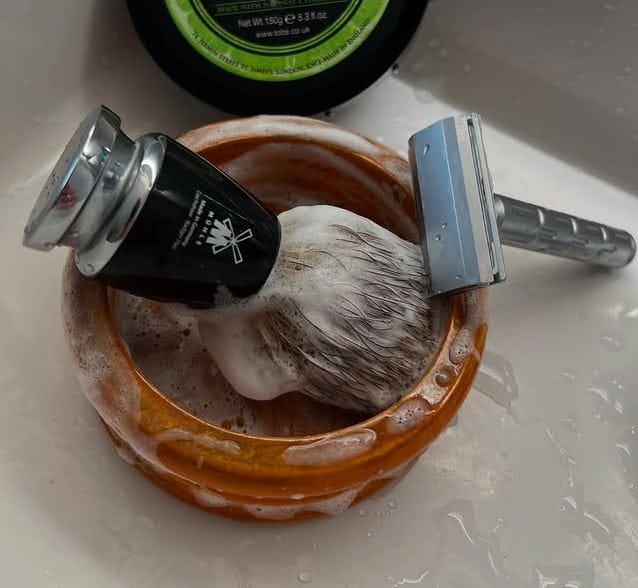
Introduction: Is Your Badger Brush Hiding Bacteria?
You spent $50–$200+ on a silvertip badger brush because you wanted a luxurious shave. But after a few months, you notice three warning signs:
- It smells like a wet dog (even when dry).
- The bristles feel crusty or scratchy.
- It doesn’t build lather as well as it used to.
That’s not normal wear – it’s buildup. Soap scum, hard water minerals, and dead skin cells are clogging the base of the knot.
The good news? A proper deep clean restores 90% of its original performance. Here’s exactly how.
How Often Should You Clean a Badger Brush? (Quick Reference Table)
| Frequency | Action Required | Why |
|---|---|---|
| After every shave | Rinse with warm water + gentle shake | Removes surface soap |
| Weekly | Mild dish soap rinse | Prevents soap film |
| Every 3–6 months | Deep clean (vinegar or borax) | Kills bacteria, removes mineral scale |
| Every 2–3 years | Replace brush (or knot) | Natural hair fatigue |
Reader question: “I rinse mine after every use – isn’t that enough?”
Answer: No. Rinsing removes lather, not the oily residue and hard water deposits that embed in the hair cuticles.
What You’ll Need for a Deep Clean
- ✅ Small bowl or mug (do not use your shaving mug)
- ✅ White distilled vinegar OR 20 Mule Team Borax
- ✅ Mild dish soap (Dawn or Seventh Generation)
- ✅ Clean towel
- ✅ Optional: Brush stand or clip to hang dry
Method 1: The Vinegar Deep Clean (Best for hard water)
Vinegar dissolves alkaline soap scum and calcium deposits. Use this if your brush feels “crunchy” when dry.
Step-by-Step:
- Prepare the solution: Mix 1 part white vinegar + 2 parts warm water in a bowl.
- Soak the bristles only – never submerge the handle (water can seep into the knot base and loosen the glue).
- Wait 5–10 minutes. Do not exceed 15 minutes – vinegar can dry out natural hair.
- Rinse thoroughly under lukewarm running water until the vinegar smell is gone.
- Lather with mild dish soap for 30 seconds to recondition the hair.
- Final rinse and dry.
⚠️ Warning: Vinegar strips natural oils. Always follow with a soap lather to re-moisturize.
Method 2: The Borax Clean (Best for odor & bacteria)
Borax is alkaline, making it ideal for breaking down fatty acids from old shaving soap.
Step-by-Step:
- Dissolve 1 teaspoon of Borax in 1 cup of warm water.
- Swirl the brush in the solution for 2 minutes – no soaking required.
- Let it sit for 5 minutes.
- Rinse for 30 seconds under warm water.
- Repeat with clean water until no slipperiness remains.
- Gently squeeze (don’t pull) excess water from the tips.
Comparison: Vinegar vs. Borax – Which One Should You Use?
| Factor | White Vinegar | Borax |
|---|---|---|
| Best for | Hard water scale, soap scum | Bacterial odors, old grease |
| Cost | $ | $ |
| Safety on badger hair | Can dry out if over-soaked | Very safe short-term |
| Smell during cleaning | Strong (fades after rinse) | Odorless |
| Availability | Grocery store | Laundry aisle |
| Risk to handle | Low (if kept dry) | Low (if kept dry) |
Our recommendation: Use vinegar every 6 months for hard water. Use borax quarterly if you shave daily.
The Most Common Mistakes (And How to Avoid Them)
❌ Soaking the handle – The wooden or resin handle can crack, or water seeps under the knot, causing shedding.
✅ Solution: Only submerge bristles up to the base ring.
❌ Using hot water – Hot water melts the epoxy holding the knot.
✅ Solution: Use lukewarm water (100–110°F / 38–43°C).
❌ Drying upright on its base – Traps moisture inside the knot → mold.
✅ Solution: Hang or lay sideways on a towel edge.
❌ Using shampoo or conditioner – Leaves residue that kills lather.
✅ Solution: Only use mild dish soap or specialized brush cleaner.
How to Dry Your Badger Brush Correctly (Pro Secret)
After cleaning:
- Gently squeeze from the base outward – never twist or pull.
- Flick the brush 3–4 times like a paintbrush.
- Lightly brush over a dry towel to separate hairs.
- Hang upside down or lay horizontally with bristles overhanging the counter edge.
Drying time: 24–48 hours fully. If still damp after 2 days, your brush is too dense – improve airflow.
Maintenance Schedule (Print This)
| Week | Task | Time |
|---|---|---|
| Daily | Rinse + shake | 30 sec |
| Sunday | Quick dish soap lather + rinse | 1 min |
| 1st of March & September | Vinegar deep clean | 15 min |
| As needed (odor) | Borax clean | 10 min |
When to Throw Away a Badger Brush (Yes, It Happens)
Even with perfect care, badger brushes eventually fail. Replace yours if:
- 🔴 Hair loss: Losing 5+ hairs per shave for 2 weeks.
- 🔴 Knot twist: The entire knot spins inside the handle.
- 🔴 Permanent stink: Rotten ammonia smell after cleaning.
- 🔴 Splaying: The brush no longer holds a “bulb” or “fan” shape.
A well-maintained badger brush lasts 10–15 years. A neglected one dies in 6 months.
Final Takeaway: Clean Brush = Better Shave
A dirty badger brush doesn’t just perform poorly – it can cause razor burn and ingrown hairs by failing to lift whiskers properly. Ten minutes of deep cleaning twice a year saves you $200 in early replacement costs.
Your action step today: Smell your brush. If it’s anything other than mild soap or neutral, clean it tonight.
Frequently Asked Questions (FAQ)
Q: Can I use baking soda?
A: Yes, but it’s abrasive. Mix 1 tsp baking soda in water – soak 5 minutes max.
Q: My brush still smells after cleaning. What now?
A: Repeat the borax method, then dry in direct sunlight for 2 hours (UV kills mold spores).
Q: Is a synthetic brush easier to clean?
A: Yes – synthetics don’t absorb bacteria. But many prefer badger’s water retention.