Family-Friendly Coasteering Adventures for All Skill Levels
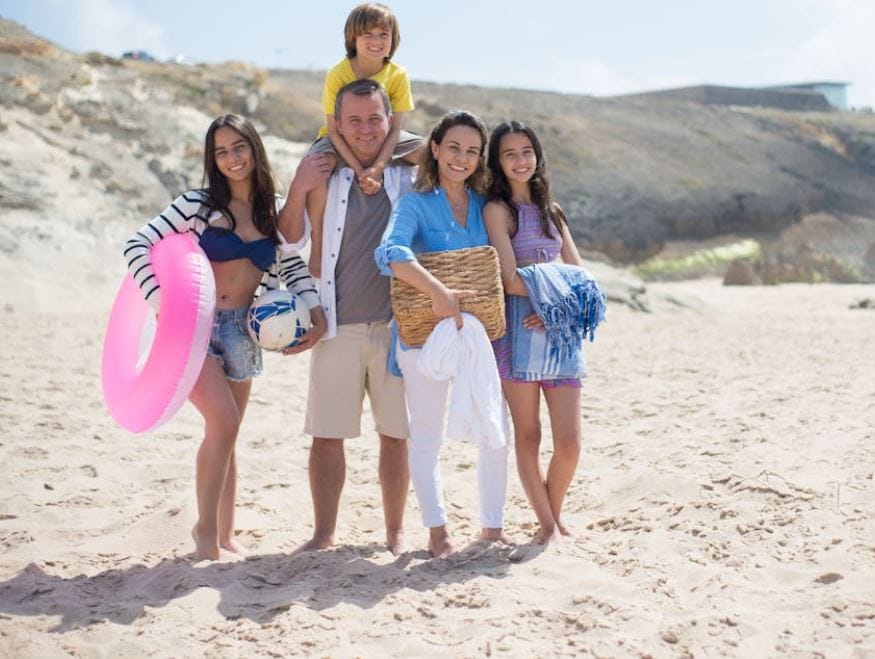
Are you searching for a family-friendly outdoor adventure?
Coasteering is a fast-growing family adventure that every person in your family can enjoy! Whether you are looking for something for the whole family, traveling as a couple or searching for the best kid-friendly water adventure, look no further than coasteering.
Here’s the thing…
Outdoor adventure activities like cliff jumping, rock scrambling and sea swimming conjure up images of grizzled professional surfers and hardcore mountain adventurers, right? Wrong. In fact, the thing is, many families are now signing up for a coasteering adventure. It is becoming one of the top water-based activities in the UK and a real adventure your family can enjoy together.
A professional guided coasteering adventure can be completely tailored to meet your skill level and your family members’ experience. Choose one of our family-friendly coasteering adventures and get ready to explore the coastlines of Cornwall!
The good news?
Our guide will teach you everything you need to know before signing up for a family coasteering adventure!
Here’s what we cover:
- A better understanding of what coasteering really involves
- Why families are signing up for coasteering adventures
- How to prepare your family for a coasteering adventure
- Skill levels and what you can expect from each session type
- Safety considerations and the responsibility of operators
- How to make the most of your coasteering adventure
So, What is Coasteering Really?
Coasteering is an outdoor activity along the coast. Participants walk along the shore, scrambling over rocks, jumping in the sea and sometimes swimming through sea caves.
Essentially, it is a set of activities along the coast presented to you by mother nature.
A really excellent coasteering experience accommodates a wide variety of abilities. In one group, some might be apprehensive, especially first-timers. Others in the group might be quite confident in the water.
The coasteering instructors plan a session that caters to everyone.
Why this is important:
This also shows the real beauty of soft adventure tourism. We know that soft adventure tourism accounts for approximately 65% of the global market. Well, soft adventure tourism includes all those activities that are not physically too demanding and family-friendly, which makes it very convenient for every family member. However, even within this market, some activities, such as our coasteering adventures, may be more or less family-friendly depending on a lot of factors, including how they are run by the operator.
Why are Families Signing Up?
If families are choosing coasteering, it is a tell-tale sign that it is on the rise.
Family adventure travel is having a moment right now. Families are choosing it for multiple reasons, such as after pandemic restrictions, they all crave outdoor adventures, or parents want more than just building sandcastles and overpriced soft drinks in the summer.
Not to mention the Instagramming-worthy bucket list moments.
Okay, no more about this.
Let’s just take a look at some of the reasons families love coasteering adventures.
- Natural: Just you and the coast. No artificial obstacles or man-made thrills.
- Flexible: Routes and difficulty can be modified on the fly.
- Teamwork: Encourages cooperation and supporting each other.
- Screen free: Everyone is too busy enjoying themselves to check their phones.
Another crucial thing…
Survey research shows that 90% of travelers plan to spend the same or more money on activities in 2024. So, families are looking for more experiences to create those memories.
And coasteering is exactly what they have been looking for.
How to Prepare your Family for a Coasteering Adventure
Planning is essential for a successful family adventure.
Begin by being truthful with yourself and your family members.
All members of the family should be at least comfortable in the water. Swimming abilities need not be up to Olympic level standards, but a modicum of comfort in the water is non-negotiable, especially when it comes to the children. If your little one is known to get panicky or clingy in deep water, a coasteering adventure might not be the best family experience.
Also, the activity itself is not for the physically weak.
There is scrambling over rocks and boulders, swimming against currents and tides, and climbing out of the sea over rocks. This requires a certain level of physical fitness. A family coasteering adventure is a total body workout and with a basic level of fitness, your body will thank you later.
Here are some things a family should consider before a coasteering session.
- Can every member of the family swim confidently in open water?
- Is there any medical condition your guides should be aware of?
- Is everyone well-fed and hydrated for the session?
- Do you let the kids know that it is perfectly fine to give up or opt-out of any jump or swim?
The best coasteering operators will also have a set of questions to ask before the session begins. These questions help them pair the group with the most suitable session.
Skill Levels: Beginner to Advanced Sessions
Professional guided coasteering adventures often offer a range of different sessions.
A session can be determined by the participants’ experience, age and even physical capabilities.
Beginner family sessions:
- Focus on low-key exploration
- Jumping is at a low level (generally 1-2 meters max)
- Swimming distances are short
- Guides spend more time on basic techniques
Suitable for families with children or nervous first-timers.
Intermediate sessions:
- Involves higher jumps and more challenging scrambles
- Stronger swimming skills and higher fitness levels are required
- Experience in climbing or mountaineering is a plus but not necessary
Suitable for active and experienced families who have tried similar outdoor activities.
Advanced sessions:
- Higher jumps and more challenging swims
- Longer periods of swimming and wading
- More technical climbing involved
- Requires proven water confidence and excellent fitness levels
- Not recommended for small children
The key take-home message here is:
Don’t be a hero.
Self-assess yourself and your family members, and start with an appropriate session, and then you can take it from there.
Safety and Operator Responsibilities
Safety is the most important thing.
Coasteering is great fun but let’s not kid ourselves. It is an activity that can come with real risks and safety procedures need to be in place.
Pick your operator wisely. Make sure they are qualified and experienced. A legitimate operator will also have the right insurance and safety equipment. A reliable coasteering operator will:
- Provide wetsuits, helmets, and buoyancy aids.
- Give a safety briefing to every single participant before the start.
- Maintain proper guide-to-participant ratios for safety.
- Check weather and tide conditions before setting out.
- Have proper emergency response and safety procedures in place.
Age restrictions are also in place for a reason.
Operators usually have an age minimum of 8-10 years. This is not an arbitrary number, as children below this age may lack the physical coordination and water confidence required for safety.
Weather and water conditions also play a huge role.
This is one of the reasons why reputable operators will cancel sessions if weather and tide conditions do not seem right.
Safety should never be compromised, and cancellations from reliable operators are a sign of an operator that is prioritising safety.
Make the Most of Your Coasteering Adventure
If you are still on the fence and want to make the most of your coasteering adventure, here is what you should know.
- Book a morning session if you are a first-timer, as the sea is calmer.
- Wear proper swimwear under your wetsuit.
- Remind your kids that it is okay to bail out of a challenging section.
- Waterproof cameras work a treat. Keep them safe.
Wrapping it Up
Family coasteering adventure is an activity that has so much to offer. There is so much more to the family coasteering adventure.
We are so excited to see you here with us at Cornish Wave. You can also have a browse at our other pages if you need more information on the subject.