Does Baking Soda Increase Alkalinity? The Definitive Guide

If you’ve ever dabbled in baking, cleaning, or even natural remedies, you’ve likely asked the question: Does baking soda increase alkalinity? The short answer is a resounding yes. Baking soda is a powerful, natural alkaline substance that can effectively raise pH levels in various applications, from your swimming pool to your body.
But how does it work, and when should you use it? This definitive guide will break down the science, the applications, and the important precautions you need to know.
The Simple Science: What is Baking Soda?
To understand its effect on alkalinity, we must first define what baking soda is. Its scientific name is sodium bicarbonate (NaHCO₃). It is a chemical compound that is naturally alkaline with a pH of around 8.3 when dissolved in water (neutral is 7.0).
When introduced to an acidic environment, baking soda reacts to neutralize that acid. This reaction is what makes your cakes rise (reacting with acidic buttermilk or vinegar) and what gives it its famed fire-extinguishing properties (it releases carbon dioxide to smother flames).
Quote from a Chemist’s Perspective: “Sodium bicarbonate is a classic example of a buffer. It doesn’t just raise pH; it resists drastic changes in pH by absorbing excess hydrogen ions (acids). This makes it exceptionally effective for managing and stabilizing alkalinity, not just creating a one-time spike.” – Dr. Elena Roberts, PhD in Chemistry.
How Baking Soda Increases Alkalinity
The key to understanding baking soda’s role lies in differentiating between pH and Total Alkalinity.
- pH: Measures how acidic or basic the water is on a scale from 0 (highly acidic) to 14 (highly basic). It’s a measure of intensity.
- Total Alkalinity (TA): Measures the water’s ability to neutralize acid, essentially its buffering capacity. It’s a measure of the quantity of alkaline substances.
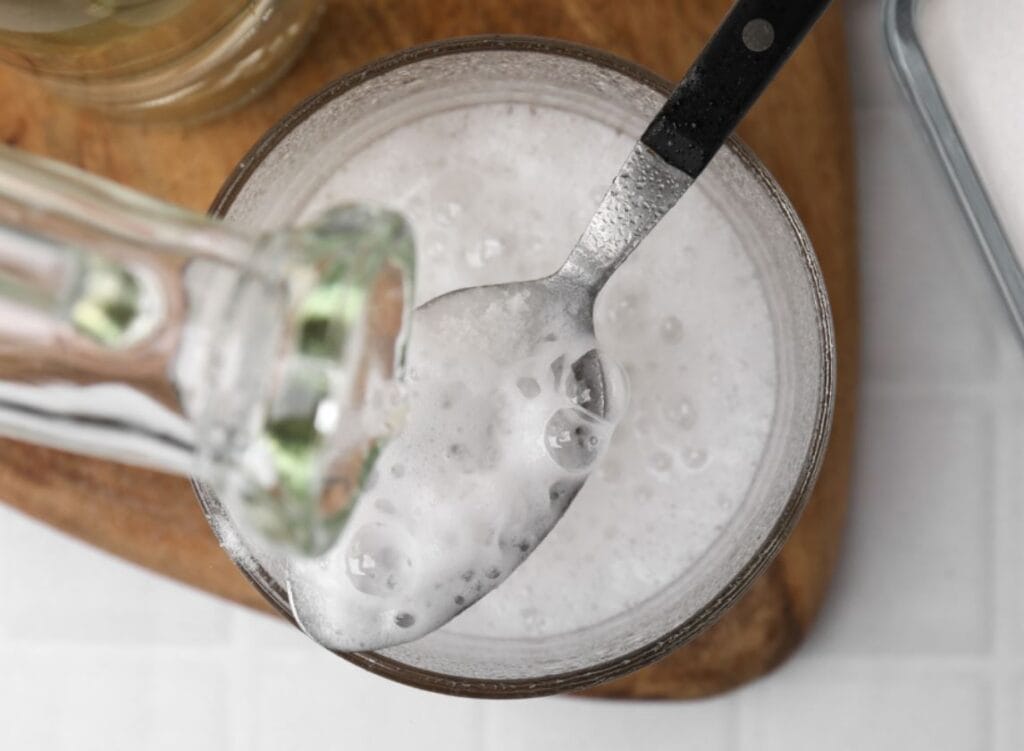
Baking soda (sodium bicarbonate) is uniquely suited to raising Total Alkalinity. When you add it to water, it introduces bicarbonate ions, which are the primary component of a water body’s alkalinity. By increasing the bicarbonate content, you directly increase the water’s ability to resist a drop in pH.
In simple terms: Baking soda is the go-to chemical for raising Total Alkalinity.
Key Applications: Where Baking Soda Raises Alkalinity
1. In Swimming Pools and Spas
This is the most common and precise use for baking soda to manage alkalinity. If your pool’s Total Alkalinity (TA) is low, the pH becomes unstable and can swing wildly (a phenomenon called “pH bounce”). Adding sodium bicarbonate is the standard industry practice to raise TA and stabilize the pH, protecting your pool equipment and ensuring swimmer comfort.
2. In the Human Body
This is a highly debated topic. The theory is that consuming a solution of baking soda in water can temporarily increase the alkalinity of your blood and urine. While this is true for urine (and is sometimes used under medical supervision for issues like kidney stones), the effect on blood pH is minimal and tightly regulated by your body’s powerful buffering systems.
Important: Do not self-medicate with baking soda. Consuming large amounts can lead to serious health issues, including metabolic alkalosis, electrolyte imbalances, and high blood pressure. Always consult a doctor.
3. In Cooking and Baking
Baking soda acts as a leavening agent by reacting with acidic ingredients (like lemon juice, yogurt, or vinegar). This reaction produces carbon dioxide gas, which makes batters rise. In this context, it’s neutralizing a specific acid to create a chemical reaction, not broadly increasing the alkalinity of your body.
4. In Cleaning
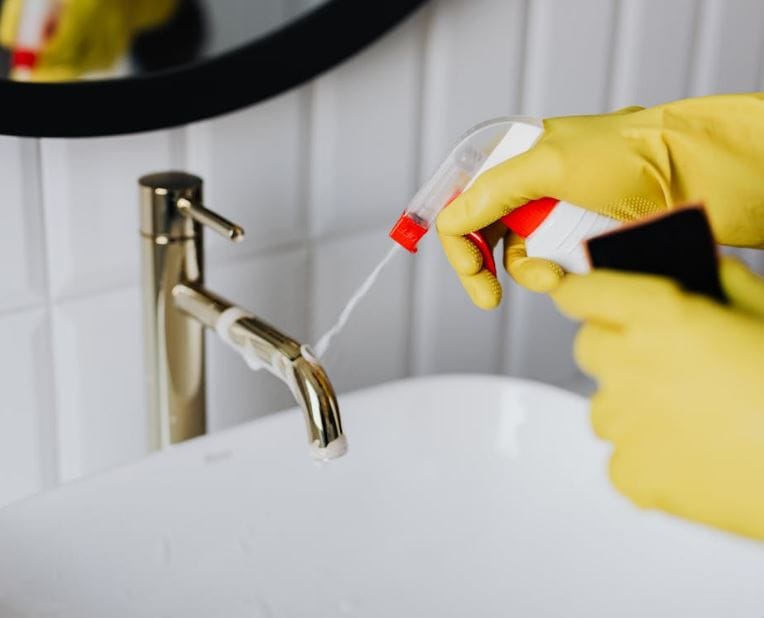
Baking soda’s mild alkalinity makes it excellent for cutting through grease and dirt, which are typically acidic. It neutralizes the acid, loosening the grime and making it easier to wipe away.
Baking Soda vs. Other pH Raisers: A Quick Comparison
It’s crucial not to confuse baking soda with similar-sounding chemicals. They are not interchangeable.
| Feature | Baking Soda (Sodium Bicarbonate) | Washing Soda (Sodium Carbonate) | Caustic Soda (Sodium Hydroxide) |
|---|---|---|---|
| Chemical Formula | NaHCO₃ | Na₂CO₃ | NaOH |
| Primary Use | Raises Total Alkalinity | Raises both pH & Alkalinity aggressively | Drastically raises pH (very corrosive) |
| pH Level (1% sol.) | ~8.3 | ~11.6 | ~13.0 |
| Safety | Mild, generally safe for skin & consumption | Caustic, can irritate skin and eyes | Highly caustic, dangerous, requires PPE |
| Common Use Case | Pool TA adjustment, baking | Heavy-duty cleaning, pH bump in pools | Industrial cleaning, drain openers |
As the table shows, baking soda is the mildest and most targeted solution for adjusting Total Alkalinity without causing a massive, uncontrolled spike in pH.
How to Use Baking Soda Safely and Effectively
- For Pools: Always test your water first. Use a pool calculator to determine the exact amount of baking soda needed based on your pool’s volume and current TA levels. Typically, you’ll dissolve it in a bucket of water and pour it around the perimeter of the pool.
- For Cleaning: Make a paste with water for scrubbing surfaces, or sprinkle it directly on sponges. Test on a small, inconspicuous area first to ensure it doesn’t scratch.
- For Personal Use: Consult a healthcare professional before considering internal use. Do not use it as a regular antacid without medical advice.
The Final Verdict
So, does baking soda increase alkalinity? Absolutely yes. Baking soda is a highly effective, safe, and inexpensive way to increase Total Alkalinity, particularly in water-based systems like swimming pools. Its buffering capability makes it superior for stabilization compared to more aggressive chemicals.
Whether you’re a pool owner, a home baker, or a DIY cleaner, understanding the alkaline power of this humble kitchen staple empowers you to use it more effectively and safely. Just remember to always test before you apply and to exercise caution, especially when it comes to internal use.