Will Vinegar Kill Lichen? A Detailed Guide to Effectiveness, Limitations, and Professional Alternatives
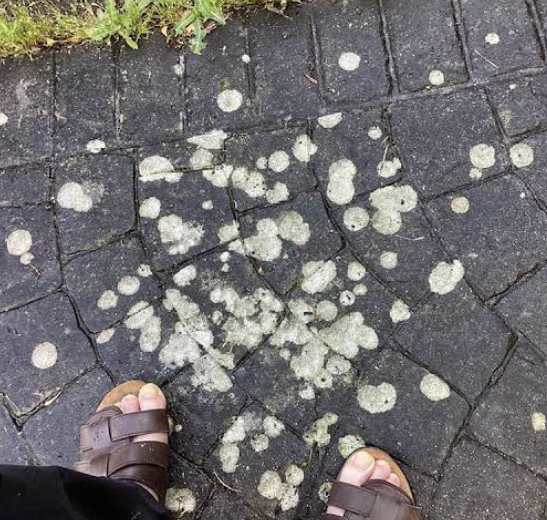
Direct Answer: White vinegar can kill lichen on hard, non-porous surfaces such as patios, paving slabs, and concrete, but it is not a complete solution. Household vinegar (typically 5% acetic acid) acts as a contact killer, dehydrating and destroying the lichen’s outer structure. However, it often fails to eliminate the organism completely, especially on porous surfaces or in deep crevices, and requires repeated applications. For persistent lichen, professional fungicidal washes containing DDAC (didecyldimethylammonium chloride) are significantly more effective and provide longer-lasting results.
What Is Lichen and Why Is It Difficult to Remove?
Lichen is not a single organism. It is a symbiotic partnership between a fungus and either an alga or a cyanobacterium. The fungus forms the outer structural layer (the thallus), while the algal partner produces food through photosynthesis . This unique biology makes lichen remarkably resilient.
Unlike moss or algae, which are relatively simple growths, lichen anchors itself deeply into the microscopic pores of stone, concrete, and paving. It does not have roots in the traditional sense, but its fungal filaments penetrate surface irregularities, making it extremely difficult to dislodge mechanically. Pressure washing alone often removes only the visible top layer while leaving viable organisms embedded beneath the surface .
There are three main growth forms of lichen relevant to property maintenance :
| Lichen Type | Description | Common Locations |
|---|---|---|
| Crustose | Thin, flat crusts that grow tightly against the surface | Paving, concrete, stone walls |
| Foliose | Flat, leafy lobes loosely attached at the base | Tree bark, rocks, older walls |
| Fruticose | Bushy or branching structures attached at a single point | Tree branches, twigs, fences |
The crustose varieties found on patios and driveways are the most problematic for removal, as they bond directly to the substrate.
Does Vinegar Kill Lichen? The Evidence
How Vinegar Works Against Lichen
Vinegar’s active ingredient is acetic acid. At concentrations found in household white vinegar (typically 5%), acetic acid acts as a desiccant—it breaks down cell walls and causes the organism to lose moisture and die . When applied directly to lichen, it can visibly blacken and kill the outer growth.
Several sources, including guidance from cleaning professionals, identify distilled white vinegar as the only household cleaning product effective against black lichen on patios . The recommended method is:
- Prepare the surface by removing debris and dirt.
- Mix vinegar and water at a 50:50 ratio.
- Pour or spray the solution over the affected area.
- Allow it to soak for up to one hour.
- Scrub vigorously with a stiff brush.
- Rinse thoroughly with clean water.
- Repeat if traces remain .
The Critical Limitations
While vinegar can produce visible results, several important caveats apply:
It does not penetrate deeply. Vinegar kills only the tissue it directly contacts. The fungal filaments embedded within stone or concrete may survive, leading to regrowth . This is why repeated applications are often necessary.
It is less effective than horticultural vinegar. Household vinegar contains about 5% acetic acid. Studies indicate that concentrations of 10–20% acetic acid are required for reliable control of tough organisms . Horticultural vinegar (10–30% acetic acid) is available but carries serious safety warnings—it can cause irreversible skin and eye damage and must be handled with protective equipment .
It can damage certain surfaces. Over-application or excessive concentration may discolour or degrade paving slabs and concrete. Experts consistently caution against “overdoing it” .
It does not address the root cause. Lichen thrives in specific conditions: moisture, sunlight, and undisturbed surfaces. Vinegar treatment does not alter these conditions, so regrowth is likely unless preventive measures are taken.
Vinegar vs. Professional Lichen Treatments: A Comparison
For property owners dealing with extensive or recurrent lichen growth, professional fungicidal washes offer superior performance. The table below compares the key characteristics.
How Professional Treatments Work
Products like Weather Guard® Fungicidal Wash Plus use DDAC, a quaternary ammonium compound that disrupts cell membranes and kills fungal and algal cells. Unlike vinegar, these products have residual activity—they remain on the surface and continue killing spores after application. They are typically applied by brush or spray, left to dry, and then the dead growth is removed by weathering or brushing over time .
One professional product, Wet & Forget, specifies that lichen requires two applications within 15–20 minutes of each other and can take 8–12 months to decompose completely . This slow breakdown is normal for lichen treatments—the organism dies relatively quickly, but its physical remains persist until weathering removes them.
When Vinegar Is the Right Choice (and When It Isn’t)
Vinegar Is Suitable For:
- Small, isolated patches of lichen on patio slabs or concrete paths
- Light surface growth that hasn’t penetrated deeply
- Routine maintenance to discourage lichen from establishing
- Budget-conscious homeowners willing to apply multiple treatments
- Areas where chemical runoff is a concern and a milder approach is preferred
Vinegar Is Not the Right Choice For:
- Extensive black lichen that has penetrated deeply into porous stone
- Historic or delicate masonry where repeated acid exposure could cause damage
- Large driveways or patios where the labor of repeated applications is impractical
- Situations requiring long-term prevention rather than temporary removal
- Lawns or garden beds—vinegar is non-selective and will damage desirable plants
A Step-by-Step Vinegar Treatment Protocol
If you choose to use vinegar, follow this professional-grade procedure for best results:
Materials Needed:
- Distilled white vinegar (5% acetic acid)
- Water
- Stiff-bristled brush (nylon or similar)
- Garden sprayer or watering can
- Protective gloves and eye protection
Step 1: Prepare the Surface
Remove all loose debris, leaves, and dirt from the affected area. A clean surface allows the vinegar to contact the lichen directly .
Step 2: Mix the Solution
Combine equal parts white vinegar and water (50:50 ratio). For stubborn growth, you may increase the vinegar concentration slightly, but avoid using undiluted vinegar as it may damage paving .
Step 3: Perform a Patch Test
Apply a small amount to an inconspicuous area first. Wait 24 hours to ensure no discolouration or surface damage occurs .
Step 4: Apply Liberally
Pour or spray the solution over the lichen, ensuring complete coverage. The area should be saturated but not pooling excessively.
Step 5: Allow to Soak
Leave the solution in place for up to one hour. Do not allow it to dry completely on the surface .
Step 6: Scrub
Use a stiff brush to scrub the treated area vigorously. This removes the dead lichen material and helps dislodge any surviving organisms.
Step 7: Rinse
Wash the area thoroughly with clean water to remove all residue and dead material.
Step 8: Repeat if Necessary
If traces of lichen remain, repeat the process. For particularly stubborn patches, leave the solution on longer or increase the vinegar ratio slightly .
Step 9: Prevent Regrowth
Apply a diluted vinegar solution (1 part vinegar to 3–4 parts water) periodically as a preventive measure .
Safety and Environmental Considerations
Vinegar is often perceived as “natural” and therefore harmless, but this is an oversimplification. Key precautions:
- Do not use horticultural vinegar without full protective equipment. Concentrations above 11% acetic acid can cause permanent eye damage and severe skin burns .
- Vinegar is non-selective. It will damage or kill any plant tissue it contacts. Avoid overspray onto lawns, garden beds, or desirable vegetation .
- Soil effects are minimal with occasional use, but repeated applications can lower soil pH slightly and may affect soil microorganisms in the treated area .
- Professional fungicidal washes require stricter handling. Keep children and pets away from treated surfaces until dry (typically 1–2 hours). Prevent runoff from entering drains or watercourses .
Preventing Lichen Regrowth
Killing existing lichen is only half the battle. Lichen thrives in conditions of moisture, shade, and undisturbed surfaces. To prevent recurrence:
- Improve drainage. Fix areas where water pools on patios or paths.
- Increase sunlight and airflow. Prune overhanging vegetation that keeps surfaces damp and shaded .
- Clean regularly. Periodic sweeping and washing prevent organic matter from accumulating and providing a foothold.
- Apply preventive treatments. A dilute vinegar solution or a residual fungicidal wash can inhibit new growth.
- Accept some lichen. On garden walls, tree trunks, and natural stone, lichen is harmless and supports biodiversity. The Royal Horticultural Society notes that lichens are not parasitic and add character to mature gardens .
Frequently Asked Questions
Does vinegar kill lichen permanently?
No. Vinegar kills the lichen it contacts, but surviving filaments may regrow, and new lichen can establish if conditions remain favorable. Repeated treatments and preventive measures are necessary for long-term control.
Can I use vinegar on lichen growing on trees?
No. Vinegar will damage tree bark and can harm the tree. Lichen on trees is harmless and should be left alone .
What is the best time to treat lichen with vinegar?
Apply on a dry, overcast day when rain is not expected for at least 24 hours. Avoid application in direct hot sunlight, which causes rapid evaporation before the vinegar can act.
Will vinegar damage my patio slabs?
At a 50:50 dilution and with proper rinsing, vinegar is generally safe for most concrete and stone paving. However, some natural stones (particularly limestone and marble) are acid-sensitive and may etch or discolour. Always perform a patch test .
How long does it take for vinegar to kill lichen?
Visible blackening and death of surface growth typically occurs within hours. Complete removal of dead material may require scrubbing and may take days or weeks depending on the thickness of growth.
Is horticultural vinegar better than household vinegar for lichen?
Horticultural vinegar (10–30% acetic acid) is more effective at killing tough organisms, but it is significantly more dangerous to handle and can damage surfaces. For most homeowners, household vinegar with repeated applications is the safer choice .
Summary: The Verdict on Vinegar for Lichen
| Question | Answer |
|---|---|
| Does vinegar kill lichen? | Yes, it kills surface growth on contact |
| Is it a complete solution? | No—it often leaves viable organisms behind |
| Is it as effective as professional products? | No—DDAC-based fungicidal washes are more thorough and provide residual protection |
| Is it worth trying? | Yes, for small patches and light growth, as a low-cost first attempt |
| When should I use professional products? | For extensive, deep-rooted, or recurring lichen on valuable surfaces |
Vinegar is a legitimate tool in the fight against lichen, particularly for homeowners seeking a low-cost, low-toxicity option for minor infestations. However, it is not a miracle cure. For persistent black lichen on patios and driveways, professional fungicidal washes offer superior efficacy, longer-lasting results, and less labor—making them the more practical choice for significant problems.