Is Lawn Rust Harmful to Dogs? A Comprehensive Guide for Pet Owners
Introduction
You walk across your green carpet of grass, only to look down and see your white sneakers covered in a fine, orange-yellow powder. Then, panic sets in as you spot your dog’s paws, muzzle, and belly coated in the same rusty dust. Your immediate question is: “Is this toxic? Is lawn rust harmful to my dog?”
The short answer is: Lawn rust is generally not toxic or fatally poisonous to dogs. However, “not poisonous” does not equal “completely harmless.” There are significant secondary health and hygiene risks associated with this fungal disease that every dog owner must understand.
This article provides a deep dive into the relationship between lawn rust (Puccinia spp.) and canine health, separating myth from fact and offering a clear action plan.
What is Lawn Rust?
Lawn rust is a common fungal disease caused by various species of the Puccinia genus. It thrives in specific environmental conditions and is purely a plant pathogen.
Ideal Conditions for Lawn Rust Growth
| Factor | Condition | Why It Matters |
|---|---|---|
| Temperature | 68°F to 85°F (20°C to 30°C) | Warm days, cool nights with heavy dew are prime triggers. |
| Moisture | High humidity, prolonged leaf wetness | Fungi require water on the leaf blade to germinate and infect. |
| Soil Health | Low nitrogen, compacted soil | Stressed, slow-growing grass is highly susceptible. |
| Sunlight | Shaded, low-airflow areas | Slows morning dew evaporation, extending infection windows. |
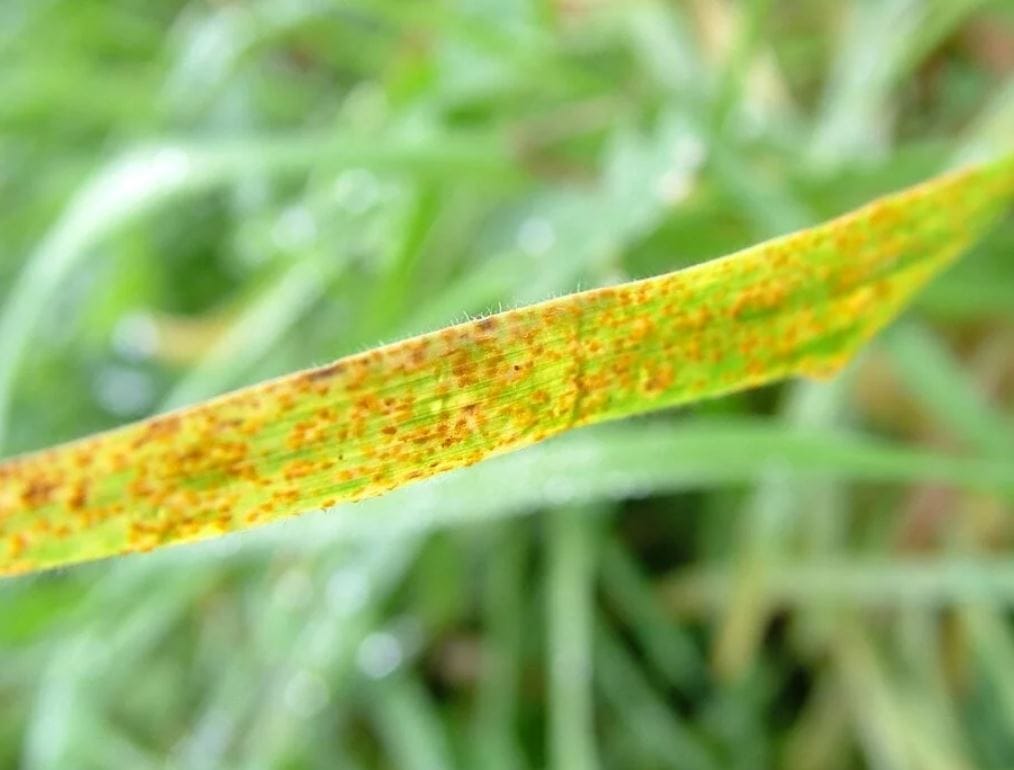
The “rust” appears as orange-yellow pustules on grass blades that rupture, releasing powdery spores. These spores are the vehicle of transmission, sticking to anything that brushes against them—including fur, skin, and claws.
Is Lawn Rust Toxic to Dogs? The Direct Answer
Here is the critical distinction for veterinarians and pet owners: Lawn rust fungus is a phytopathogen, not a mammalian pathogen. It does not invade living animal tissue and cause a systemic mycosis (fungal infection) in dogs.
Toxicity vs. Irritation: A Comparison
| Factor | Risk Level for Dogs | Detailed Explanation |
|---|---|---|
| Systemic Poisoning | None | There are no mycotoxins in standard lawn rust that cause organ failure or fatality if ingested, unlike some toxic molds found on spoiled food. |
| Fungal Infection (Mycosis) | Extremely Low | Puccinia fungi cannot colonize canine tissue. They lack the enzymes to break down keratin in skin and hair in the way ringworm does. |
| Mechanical Irritation | Moderate to High | The microscopic spores are spiky and abrasive. They can physically scratch the cornea, embed in paw pads, and clog nasal passages. |
| Inhalation Allergy | High | The primary danger. Spores act as an aeroallergen, triggering severe allergic reactions in sensitive dogs. |
| Secondary Ingestion | Moderate | While non-toxic, a dog licking massive amounts of spores off its fur can suffer acute gastrointestinal upset purely from the body’s rejection of the foreign matter. |
The 3 Major Health Risks for Dogs Exposed to Lawn Rust
While your dog won’t die from organ failure caused by lawn rust toxins, pet owners should not dismiss the “orange paws” as a mere aesthetic nuisance. Here are the clinical dangers:
1. Severe Allergic Reactions (Canine Atopy)
The most common medical consequence is an acute hypersensitivity reaction. Fungal spores are a well-documented aeroallergen. Dermal and respiratory contact can trigger:
- Contact Dermatitis: Red, inflamed skin, pustules on the belly and groin, intense itching (pruritus).
- Allergic Rhinitis: Sneezing fits, reverse sneezing, clear nasal discharge.
- Tracheobronchitis: A harsh, dry, hacking cough that mimics kennel cough. This is caused by inhaled spores irritating the tracheal lining.
2. Conjunctival and Corneal Irritation
Dogs exploring the grass nose-first often get spores in their eyes. The spiky fungal spores can scratch the cornea, leading to:
- Epiphora (excessive tearing).
- Squinting (blepharospasm).
- Chemosis (swelling of the conjunctiva).
- Secondary bacterial infections due to rubbing.
3. Gastrointestinal Upset from Grooming
Dogs are fastidious groomers. If covered in spores, they will ingest a large volume of fungal material. This “organic overload” can cause:
- Hypersalivation (drooling).
- Vomiting of orange-tinged bile or foam.
- Transient diarrhea.
(Note: If symptoms persist beyond 24 hours, consult your vet, as the ingested grass may have been treated with non-rust chemicals).
“My Dog Ate Grass with Rust Fungus” – Vet Advice
If you witness your dog munching on infected blades or obsessively licking rust-covered paws, follow this protocol:
- Do Not Induce Vomiting: The material is mechanically irritating, and inducing vomiting could cause aspiration (inhalation) of spores into the lungs, which is far more dangerous than stomach ingestion.
- Rinse the Mouth: Gently flush the mouth with cool water, focusing on the gums and tongue to remove the gritty texture.
- Provide a Binder: A small meal of plain pumpkin puree or unflavored yogurt can help bind residual spores and soothe the stomach lining.
- Monitor: Watch for facial swelling, hives, or breathing difficulty—signs of an anaphylactic allergy (rare but possible).
Treatment and Prevention: Breaking the Spore Cycle
Treating the dog is only half the battle; you must address the source. Do not simply lock your dog inside; fix the lawn.
Phase 1: Immediate Dog Decontamination
When your dog comes in looking like a cheeto, avoid rubbing the fur, which grinds spores deeper into the skin.
| Step | Action | Purpose |
|---|---|---|
| 1 | Pre-Rinse (Outdoors) | Use a hose or watering can to physically blast off the bulk of the spores before entering the house. |
| 2 | Degreasing Shampoo | Bathe with a gentle, ophthalmic-safe pet shampoo. Avoid oatmeal shampoos initially (spores can stick to the oat layer); use a clear, hypoallergenic formula. |
| 3 | Eye Flush | Use sterile veterinary eye wash to irrigate the eyes thoroughly. |
| 4 | Paw Soak | A diluted povidone-iodine soak (weak tea color) acts as a non-toxic antifungal/antibacterial to prevent secondary infections between toes. |
Phase 2: Lawn Eradication Strategy
Killing lawn rust requires cultural practices, not just chemicals.
- Mow Frequently: Cut the grass 2-3 times a week, bagging the clippings. This physically removes the pathogen reservoir before the pustules burst. Do not compost these clippings.
- Nitrogen Boost: Apply a quick-release nitrogen fertilizer. This forces the grass to grow rapidly, outpacing the slow-growing rust fungus. You literally “grow out” of the disease.
- Morning Watering Only: Water deeply between 5 AM and 10 AM to ensure blades dry completely before the cool evening dew settles.
- Reduce Shade: Prune tree branches to increase sunlight penetration to the turf.
Phase 3: Mitigation Walkways
Create a “spore break.” A heavy mulch path of cedar chips between the lawn edge and the back door acts as a physical wipe for paws, reducing spore traffic by up to 60%.
Fungicide Safety: Protecting the Dog, Not Just the Lawn
If cultural controls fail and severe infection threatens the turf’s survival, fungicides are required. Human safety and pet safety differ drastically. Do not assume “organic” means “pet-safe.”
| Fungicide Type | Pet Safety Profile | Precautionary Period (Re-entry) |
|---|---|---|
| Chlorothalonil | High Risk. A contact carcinogen and severe eye irritant. Not recommended for pet households. | 48-72 hours (until dry) |
| Propiconazole | Moderate Risk. Standard DMI fungicide. Liver irritant if ingested in large quantities over time. | Until spray has completely dried (usually 4-6 hours) |
| Azoxystrobin | Low Risk. Strobilurin class. Low acute toxicity to mammals. | Until dry to the touch |
| Sulfur / Lime-Sulfur | Caution. “Natural” but highly alkaline. Can cause severe skin burns and oral ulceration if ingested wet. | 24 hours, or until after first irrigation |
| Neem Oil | Low Risk. Safe for skin but smells strongly, prompting dogs to roll or lick. Can cause mild GI upset. | 2-3 hours (until absorbed) |
Golden Rule: The label is the law. A product labeled “safe once dry” means you must physically escort the dog out on a leash to a separate area until those conditions are met.
Frequently Asked Questions (FAQs)
Q: Can lawn rust cause my dog’s urine to turn red?
A: No. The fungi are not absorbed systemically, and the spores do not redden urine. If you see orange or red urine, it signifies hematuria (blood), potentially from a urinary tract infection, bladder stones, or antifreeze toxicity. Seek veterinary attention immediately—do not confuse it with the powder on the fur.
Q: Is grass rust fungus toxic to other pets like cats or rabbits?
A: The mechanism is the same. Cats (obligate groomers) may be more prone to vomiting hairballs coated in spores, while rabbits (eating the grass) might get minor GI stasis from an overloaded cecum. It is not specifically “toxic” to them, but biologically stressful.
Q: Can I get lawn rust off my dog with just water?
A: A high-pressure hose rinse will remove about 80% of the surface dust. However, the waxy coating of dog fur traps microscopic particles. A surfactant (soap) is required to lift the oily, spiked spores off the hair shaft completely.
Q: How do I distinguish lawn rust from other orange things my dog gets into (pollen, insulation)?
A: Rub the orange substance between your fingers. Pollen (like pine pollen) is fine and bright yellow, spreading like talcum powder. Lawn rust smears slightly orange-red and feels slightly gritty. Fiberglass insulation glitters but does not smear red; it also causes immediate prickling pain to your skin.
Q: Will lawn rust hurt my children playing on the grass?
A: The respiratory risk is similar to dogs. Children with asthma should avoid areas with active sporulation. The spores can also stain clothes permanently due to their pigment, similar to turmeric.
Q: Does lawn rust die in the winter?
A: The active pustules (uredinia) die with a hard frost, but the fungus overwinters as dormant mycelium in the grass crown and thatch. It re-emerges when spring temperatures and moisture align with a stressed host plant.