The Comprehensive Guide to Managing Aphids on Apple Trees
Aphids represent one of the most persistent and economically significant pest challenges for apple growers worldwide. These sap-feeding insects can cause direct damage through nutrient depletion, inject toxins that distort fruit and foliage, and produce honeydew that promotes unsightly sooty mold growth. Understanding the distinct species that affect apple trees, their life cycles, and an integrated management approach is essential for maintaining orchard health and productivity.
Species Identification and Biology
Several aphid species infest apple trees, each with unique characteristics, damage patterns, and management requirements. Accurate identification is the critical first step in effective control.
Comparison of Major Apple Aphid Species
Rosy Apple Aphid represents the most severe threat to apple production. This species injects a toxin during feeding that causes leaves to curl tightly and fruit to become dwarfed and misshapen . A single stem mother feeding on a leaf underside near the midrib can cause that leaf to fold “almost as tightly as the outer wrappings of a cigar” . Cool, wet springs favor rosy apple aphid development by creating conditions unfavorable for their natural predators and parasites .
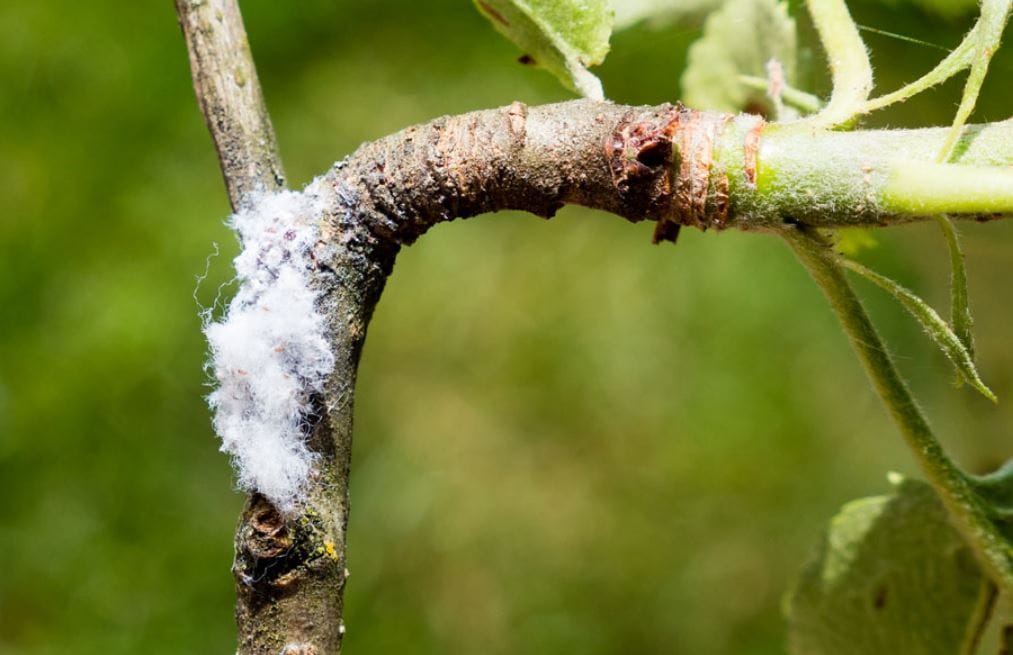
Woolly Apple Aphid presents unique management challenges due to its protective waxy covering, which impedes insecticide penetration. Their feeding induces gall formation on roots and woody tissues, compromising tree vigor . Research continues to evaluate effective control strategies for organic and conventional systems, with a particular focus on biological alternatives .
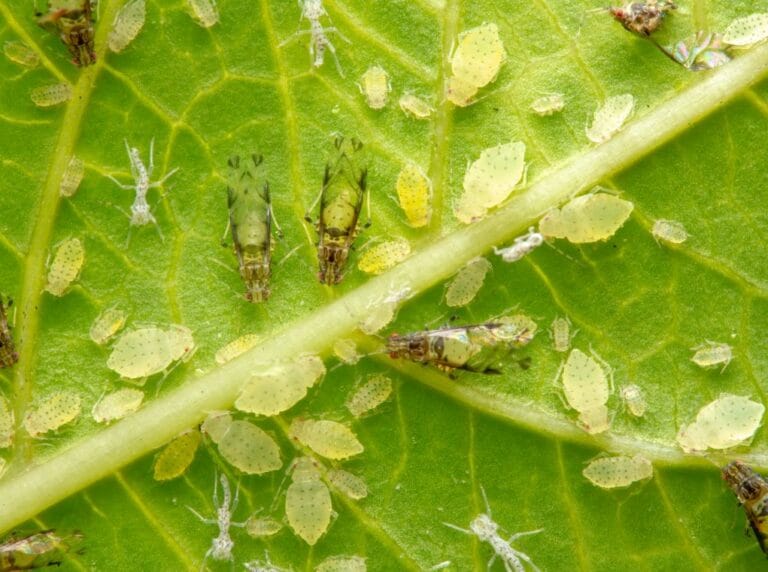
Green Apple Aphid and its near-identical relative, the Spirea Aphid (Aphis spiraecola), are indistinguishable in the field and share similar biology. Unlike rosy apple aphids, these species remain on apple trees year-round rather than migrating to alternate hosts . They favor rapidly growing terminal shoots and watersprouts, and their damage is generally less severe than rosy aphids.
The Apple Grain Aphid appears very early in spring but rarely causes economically significant damage and typically leaves apple trees before bloom to migrate to grain hosts .
Life Cycles and Population Dynamics
Understanding aphid reproductive strategies is essential for timing management interventions effectively.
Green apple and spirea aphids overwinter as shiny black, football-shaped eggs laid on smooth twigs, pruning scars, and bark crevices of the previous season’s growth. Egg hatch begins at silver tip and is generally complete by half-inch green stage . All emerging nymphs are females—”stem mothers”—that mature and produce live offspring without mating (parthenogenesis) . This remarkable reproductive capacity enables rapid population buildup; at least nine generations occur annually on apple, with up to seventeen in warmer western regions .
In late summer, winged forms (alates) appear and disperse to other trees. These produce true sexual forms that mate and lay the overwintering eggs, completing the annual cycle . The ability to produce live young, combined with multiple generations, accounts for explosive population growth during favorable conditions.
Rosy apple aphids follow a similar overwintering pattern but historically migrated to alternate summer hosts such as plantain and dock. Recent evidence suggests this pest’s biology may be changing, with populations now potentially breeding continuously on apple without migrating .
Integrated Pest Management Strategies
Effective aphid management requires a multi-tactic approach that balances biological, cultural, chemical, and physical controls.
Biological Control and Habitat Management
Natural enemies provide significant suppression of aphid populations. Key predators include:
- Lady beetles (Coccinellidae)—adults and larvae consume up to 200 aphids per day, totaling approximately 2400 over their lifespan
- Green lacewings—larvae are voracious aphid predators
- Syrphid fly larvae—highly effective aphid consumers
- Parasitic wasps—Aphelinus mali (controls woolly aphids) and Aphidius testaceipes (generalist aphid parasitoid)
Habitat manipulation can enhance biological control. Research demonstrates that flower strips planted in or around orchards can reduce rosy apple aphid presence by up to 50% at distances up to 50 meters from the planting . Specific flowering species attract and sustain beneficial insects:
- Sweet alyssum shows high attractiveness to syrphid flies and has been shown to suppress woolly apple aphid populations on adjacent trees
- Buckwheat supports natural syrphid populations when grown as a cover crop
- Melliferous (honey-producing) species in flower strips provide resources for beneficial insects
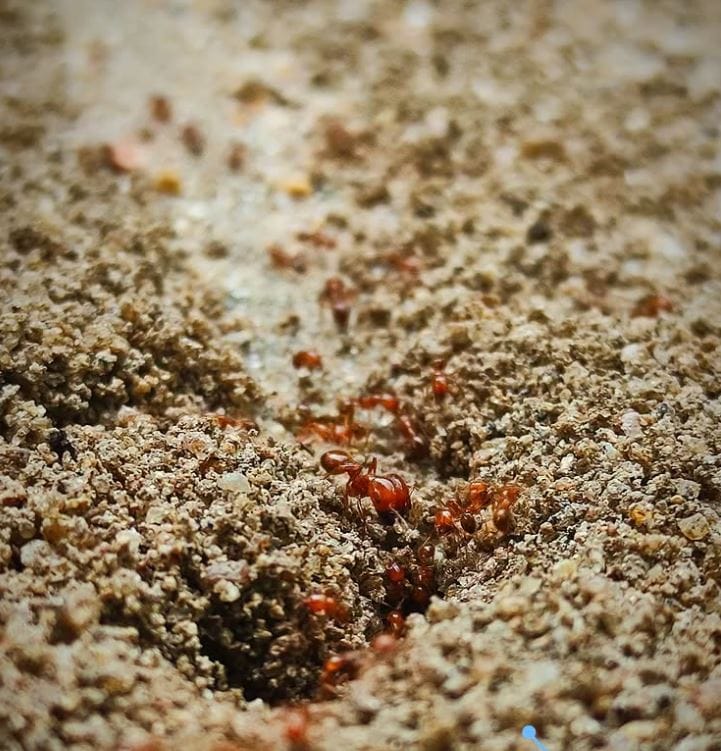
Successful biological control requires avoiding broad-spectrum insecticides that disrupt natural enemy populations. Additionally, controlling honeydew-feeding ants is important, as ants protect aphid colonies from predators in exchange for honeydew .
Cultural Controls
Nitrogen Management: Excessive nitrogen fertilization promotes succulent new growth that is particularly attractive to aphids. Using slow-release or organic nitrogen sources and avoiding over-fertilization reduces infestation pressure .
Pruning and Sanitation: Removing watersprouts and suckers eliminates preferred feeding sites. For woolly aphids, pruning out large colonies on suckers can be effective . Proper pruning also improves spray penetration and coverage.
Irrigation Practices: Heavy rain and strong winds can significantly reduce aphid populations by washing insects from plants. Sprinkler irrigation may similarly suppress aphids .
Resistant Varieties: Rootstock selection is particularly important for woolly aphid management. Resistant options include MM 106, MM 111, G11, G41, G213, G214, G222, G202, G969, G210, and G890 . For rosy apple aphids, avoid susceptible cultivars including Cortland, Ida Red, Golden Delicious, Rome, York, and Stayman .
Monitoring and Decision-Making
Systematic monitoring enables timely intervention before populations reach damaging levels.
Rosy Apple Aphid Monitoring:
- Inspect for curled leaves during spring from tight cluster to pre-pink
- Examine leaf undersides for pinkish-red aphids
- Assess dormant period for overwintering eggs
Green Apple/Spirea Aphid Monitoring:
- Randomly select 10 shoots (not watersprouts) on each of five trees per block
- Examine for curled leaves and check underside for yellowish-green aphids
- Treatment warranted if more than four leaves per shoot have aphids on average
Apple Grain Aphid Monitoring:
- Inspect at least two blossom trusses on each of 25 trees at green cluster to pink bud growth
- Treatment justified if 50% of trusses are infested with 5+ aphids
Chemical Control Options
When biological and cultural measures are insufficient, chemical interventions may be warranted.
Dormant/Delayed-Dormant Applications:
- 2% oil emulsion sprays applied during dormant period provide control
- Effective for overwintering eggs, particularly of rosy apple aphid
In-Season Sprays:
- Rosy apple aphid: Apply during tight cluster to pre-pink stage
- Woolly apple aphid: Apply during pink to petal-fall; adding horticultural oil helps penetrate waxy covering
- Green apple aphid: Target when economic threshold exceeded (≥10 infested terminals per 100)
Organic Options: Insecticidal soap, pyrethrin, and neem oil can be effective when applied thoroughly to stems and leaf undersides . Note that insecticidal soaps require complete coverage and are ineffective in hard water .
Chemical Resistance Concerns: Given the protective nature of woolly aphid wax, research continues to identify effective, sustainable control strategies for all production systems—conventional, integrated, and organic .
Physical and Mechanical Controls
Simple physical interventions can effectively manage small infestations:
- Water streams: A stiff jet of water washes aphids from plants; cradle plant tips while washing for best results
- Hand-wiping: Effective for small, localized infestations before leaves curl
- Yellow traps: Aphids are attracted to yellow; bright yellow dishpans filled with soapy water placed near vulnerable plants serve as effective traps
Conclusion
Successful aphid management in apple orchards requires a comprehensive, integrated approach that recognizes the distinct biology and ecology of the major species. The rosy apple aphid presents the greatest threat due to its toxin-induced fruit distortion, while the woolly apple aphid’s protective waxy covering challenges standard control methods. Green apple aphids cause more moderate damage but can significantly impact young trees and vigorous growth.
Prioritizing biological control through habitat management—including strategic flower strip plantings and avoidance of broad-spectrum insecticides—provides sustainable, long-term suppression . Regular monitoring, cultural practices that reduce host plant suitability, and timely chemical interventions when thresholds are exceeded form the foundation of effective pest management. By integrating these approaches, growers can maintain healthy, productive orchards while minimizing environmental impacts and preserving beneficial natural enemy populations.