Types of Termites in Georgia: A Professional Identification Guide
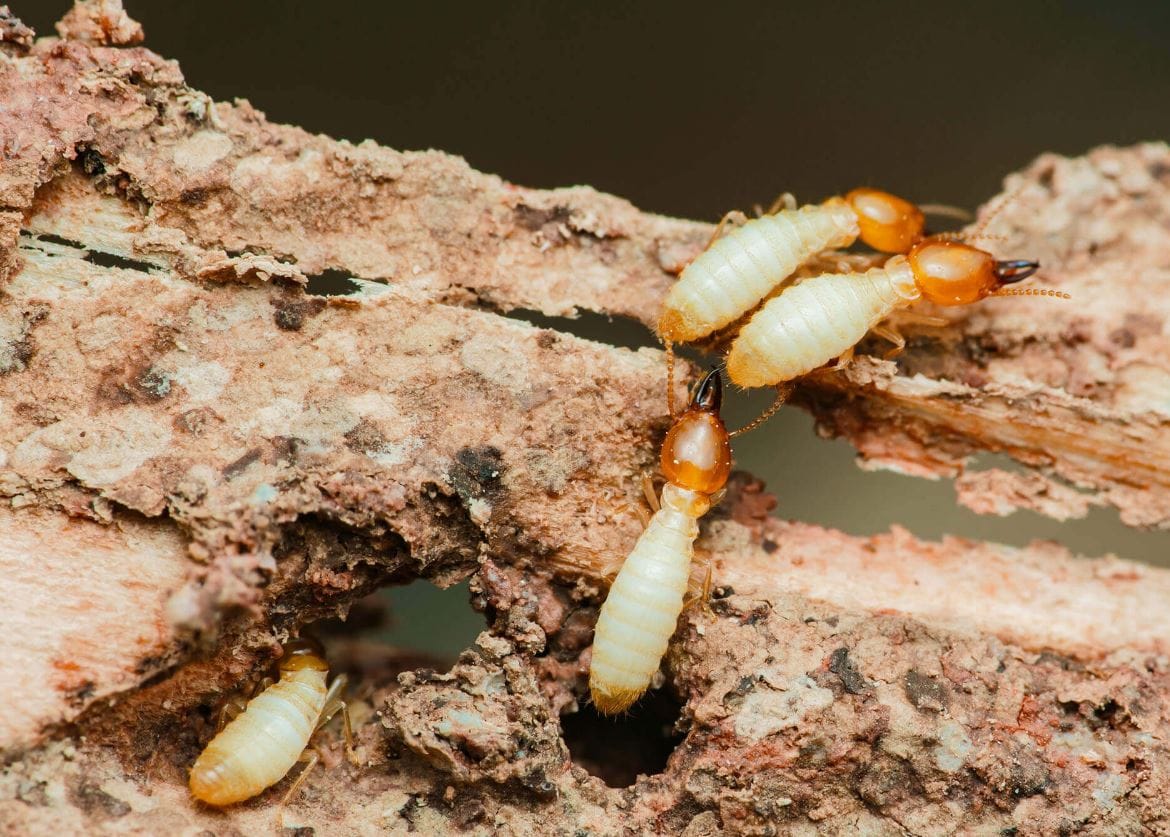
Georgia’s warm, humid climate and abundant rainfall create an ideal environment for over a dozen termite species. However, only a few cause significant structural damage. For homeowners, property managers, and pest control professionals, accurate identification is the first step toward effective treatment.
This guide details the three most prevalent termite types in Georgia—Subterranean, Formosan, and Drywood—including their morphology, behavior, and geographic hotspots.
Why Termite Identification Matters in Georgia
Termites cause over $5 billion in property damage annually in the United States. Georgia ranks among the top states for termite activity due to its long growing season and high humidity. Misidentifying a species can lead to ineffective treatment, resulting in continued infestation and costly repairs.
Key identifiers to examine:
- Alates (swarmers): Body color, wing veins, and size.
- Workers: Pale, soft-bodied, but rarely seen outside mud tubes.
- Frass (droppings): Drywood termite pellets vs. Subterranean mud.
- Damage patterns: Hollowed wood versus mud-filled galleries.
The 3 Primary Termite Species in Georgia
Below is a comparison table of the main structural pests, followed by detailed profiles.
| Feature | Eastern Subterranean Termite | Formosan Subterranean Termite | Southeastern Drywood Termite |
|---|---|---|---|
| Scientific Name | Reticulitermes flavipes | Coptotermes formosanus | Incisitermes snyderi |
| Swarm Season | Spring (Feb–May) | Late spring to early summer (Apr–Jun) | Late spring to summer (May–Jul) |
| Swarm Color | Dark brown to black | Yellowish-brown | Reddish-brown head, dark body |
| Wing Veins | Two visible veins near leading edge | Two veins, plus tiny hairs on wings | Three or more thick, sclerotized veins |
| Soldier Defense | Rectangular head with straight mandibles | Teardrop-shaped head, curved mandibles | Broad, square head with strong tooth on mandibles |
| Nesting Site | Underground, mud tubes | Underground + aerial carton nests | Inside sound, dry wood (no soil contact) |
| Moisture Need | High (soil contact required) | High (can retain moisture in carton material) | Low (extract water from wood) |
| Damage Rate | Slow to moderate (1 lb of wood per year per colony) | Very fast (up to 13 lbs per year) | Slow (small colonies, but multiple colonies possible) |
| Primary GA Regions | Statewide | Coastal cities: Savannah, Brunswick, Atlanta (limited) | Coastal zone from Tybee Island to St. Marys; inland near ports |
Detailed Species Accounts
1. Eastern Subterranean Termite (Reticulitermes flavipes)
Most common and widespread in Georgia.
This native species is responsible for approximately 80% of termite damage in the state. Colonies can exceed 1 million individuals, though 200,000–500,000 is typical.
Identification markers:
- Swarmers: ¼–⅜ inch long, dark brown body with translucent, pale-brown wings.
- Soldiers: ⅛–¼ inch, rectangular head with straight, pincer-like mandibles.
Behavioral signature:
- Builds characteristic mud tubes on foundations, floor joists, and crawl spaces.
- Requires contact with soil for moisture. Never nests entirely within above-ground wood.
Georgia distribution: Every county, especially active in red clay and sandy loam regions like the Piedmont (Atlanta, Athens, Columbus) and coastal plain (Albany, Valdosta).
2. Formosan Subterranean Termite (Coptotermes formosanus)
Most aggressive and destructive termite in Georgia.
Introduced from East Asia, this invasive species has established satellite populations in Georgia’s port cities. Formosan termites build carton nests (a mixture of chewed wood, soil, and saliva) that retain humidity, allowing them to infest structures without direct soil contact.
Identification markers:
- Swarmers: ⅜–½ inch, yellowish-brown, with dense hairs on wing membranes (visible under 20x magnification).
- Soldiers: Pear-shaped (teardrop) head with curved, dark mandibles. Exudes a white, sticky defensive fluid from the front.
Behavioral signature:
- Can chew through foam insulation, plaster, and thin lead sheathing.
- Damages live trees, utility poles, and boats in addition to homes.
Georgia hotspots:
- Savannah and surrounding Chatham County (heaviest infestations)
- Brunswick (Glynn County) – multiple reported colonies
- Recent detections in metro Atlanta (imported via infested railroad ties and landscape timbers)
3. Southeastern Drywood Termite (Incisitermes snyderi)
Locally common but less frequent than subterranean species.
Unlike subterranean species, drywood termites do not require moisture from soil. They colonize sound, seasoned wood in attics, furniture, and siding. A single colony contains only a few thousand individuals, but multiple colonies can infest one structure.
Identification markers:
- Swarmers: ~½ inch, reddish-brown head, dark brown body, wings with three or more distinct, darkened veins.
- Soldiers: Wide, square head with a prominent tooth on the inner margin of each mandible.
- Frass: Distinctive six-sided, sand-like pellets pushed out through small “kick-out” holes.
Behavioral signature:
- Leaves thin, blistering patterns on wood surfaces.
- No mud tubes. Infestations are often detected by piles of frass under window sills or light fixtures.
Georgia distribution: Primarily within 30 miles of the Atlantic coast from Savannah to St. Marys. Also found in older coastal towns like Darien, St. Simons Island, and Jekyll Island. Inland reports are rare but possible near ports via infested wooden crates.
Less Common Species in Georgia
While rarely causing structural damage, the following termites may be encountered:
| Species | Typical Habitat | Pest Status |
|---|---|---|
| Dark Southeastern Subterranean Termite (R. virginicus) | Decaying logs, tree stumps | Minor structural damage |
| Light Southeastern Subterranean Termite (R. hageni) | Moist, decaying wood in forests | Rarely enters homes |
| Western Drywood Termite (Incisitermes minor) | Intercepted occasionally in furniture from CA or AZ | Not established in GA |
Professional Recommendations for Georgia Property Owners
If you have no infestation:
- Maintain a 4–6 inch gap between soil and wood siding.
- Keep gutters and downspouts directing water away from foundation.
- Remove wood debris, stumps, and formwork from near the structure.
- Schedule an annual professional inspection, especially in zones 1–3 (see map below).
If swarmers appear indoors:
- Collect several specimens in rubbing alcohol. Do not crush them.
- Save intact wings for species identification.
- Do not treat with over-the-counter sprays—this scatters the colony without eliminating it.
Georgia termite treatment zones (by risk):
- Zone 1 (Very High): Coastal counties (Chatham, Glynn, McIntosh, Camden) – Formosan and drywood risks.
- Zone 2 (High): Piedmont and lower coastal plain – Eastern subterranean dominant.
- Zone 3 (Moderate): North Georgia mountains – Reduced but present subterranean activity.
Conclusion
The three main termite types in Georgia—Eastern Subterranean, Formosan Subterranean, and Southeastern Drywood—each require different identification keys and treatment strategies. Homeowners along the coast must remain vigilant for Formosan and drywood infestations, while those inland face primarily Eastern subterranean pressure. For any active infestation, consult a Georgia-licensed pest control professional. Never delay treatment: a colony can compromise structural wood unnoticed for years.