How to Clean Brass Instruments: A Professional’s Step-by-Step Guide
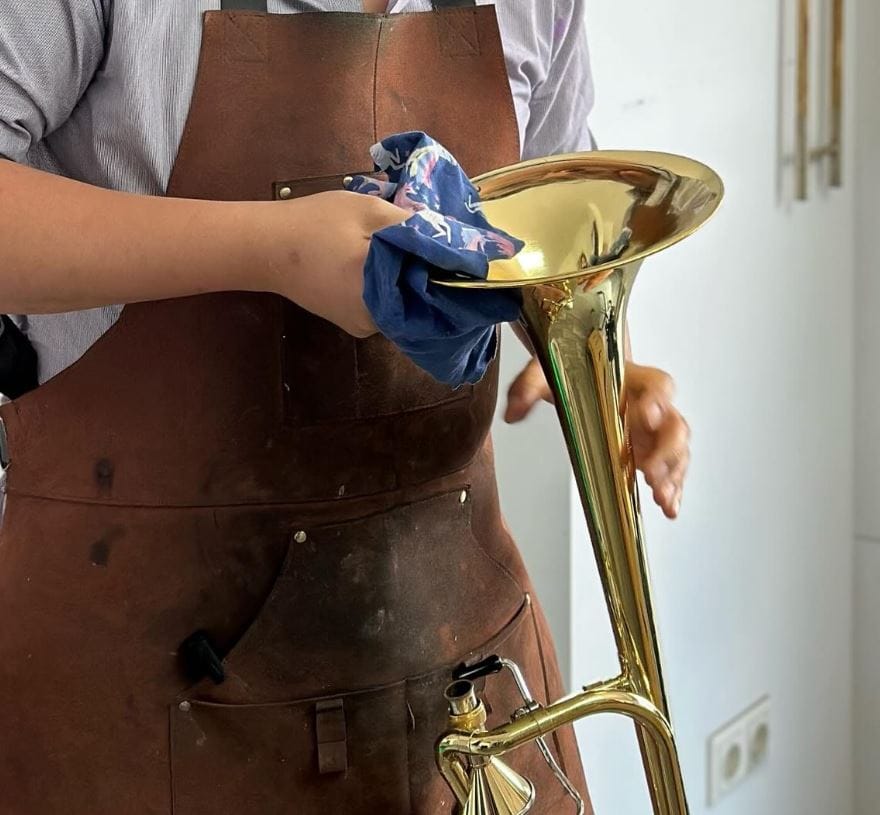
Maintaining a brass instrument (trumpet, trombone, French horn, tuba, or cornet) is not merely cosmetic. Built-up residue—saliva, mineral scale, and oxidized lacquer—directly impacts valve compression, slide motion, and intonation. Professional cleaning every 6–12 months extends the life of your instrument, but knowing how to clean correctly prevents costly damage.
This guide distinguishes between routine maintenance (weekly) and deep cleaning (quarterly), and clarifies when to stop DIY and call a repair technician.
Critical Safety Warning: Know Your Finish
Before applying any cleaning agent, identify your instrument’s finish. Using the wrong product can permanently ruin the surface.
| Finish Type | Visual Cues | Cleaning Restriction |
|---|---|---|
| Clear lacquer | Shiny, yellowish tint; common on student models | No hot water (>40°C / 104°F); no chemical polish |
| Raw brass (unlacquered) | Dull, matte, darkens over time | Accepts brass polish; requires frequent cleaning |
| Silver plate | Bright, white-metallic sheen | No abrasive pads; use only silver-specific cloths |
| Gold plate / epoxy | Soft yellow luster | Minimal chemicals; soft flannel only |
Rule of thumb: If you are unsure, assume lacquered. Test a small area under the bell rim with a drop of dish soap—no color transfer means it is safe.
Phase 1: Routine Maintenance (Weekly / After Each Playing Session)
This prevents red rot (dezincification) and valve corrosion.
- Drain moisture via water keys (spit valves).
- Swab the leadpipe using a weighted pull-through cloth (e.g., Yamaha or Selmer swab).
- Wipe exterior with a microfiber cloth—never paper towels (they scratch lacquer).
- Lubricate valves & slides with instrument-specific oil/grease. *Do not use WD-40 or household oils.*
Phase 2: Deep Cleaning (Every 3–4 Months)
This is the standard “home bath.” Allow 60–90 minutes.
Tools & Materials Required
| Item | Purpose | Substitution Allowed? |
|---|---|---|
| Large plastic tub (or bathtub liner) | Full submersion | No metal sinks (scratch risk) |
| Lukewarm water (30–35°C / 85–95°F) | Safe for lacquer | No hot water |
| Mild dish soap (Dawn, Ivory) | Degreasing | No detergent, bleach, or vinegar |
| Flexible bore brush set (nylon) | Inside tubing | No metal brushes |
| Valve casing brush (soft) | Valve housing | No bottle brushes |
| Mouthpiece shank brush | Mouthpiece interior | Yes—small nylon brush |
| Microfiber cloths (4–6) | Drying & polishing | No cotton rags (lint risk) |
| Slide grease | Reassembly | Name-brand (La Tromba, Hetman) |
| Valve oil | Lubrication | Synthetic recommended (e.g., Ultra-Pure) |
Step-by-Step Disassembly & Cleaning
Step 1: Disassemble safely
Remove all slides, valves (keep in correct order), bottom caps, and the mouthpiece. Place small parts (valve springs, buttons, caps) in a mesh container or labeled bowl.
Step 2: Prepare the bath
Fill tub with lukewarm water and 1 tbsp mild dish soap. Do not agitate into foam—excess bubbles reduce contact time.
Step 3: Submerge (lacquered only)
- Lacquered instruments: Submerge the body and slides for 10–15 minutes. Do not soak valves or mouthpiece (rubber/felt parts degrade).
- Raw brass / silver plate: Reduce soak to 5 minutes to avoid tarnish acceleration.
Step 4: Brush all tubing
Using the correctly sized bore brush, pass through each slide and the main tuning slide. For leadpipe, use a flexible snake brush. Rinse with lukewarm water afterward.
Step 5: Clean valves & casings
- Valves: Wipe with a damp microfiber—never submerge felts or cork.
- Casing: Gently insert valve casing brush with soapy water, then rinse.
Step 6: Mouthpiece cleaning
Soak mouthpiece separately in 50/50 water & white vinegar for 10 minutes (removes calcium deposits). Then scrub with shank brush.
Step 7: Rinse thoroughly
Run lukewarm water through every tube until no soap remains. Shake out excess water.
Step 8: Dry completely
Air-dry on a towel for 30 minutes. Use a pull-through swab for any remaining moisture in tight bends.
Step 9: Reassemble with fresh lubricant
Apply slide grease to all tuning slides (very thin layer). Apply 3–5 drops of valve oil to each valve shaft before inserting.
Phase 3: Chemical Cleaning (Professional Only – DO NOT DIY)
For heavy mineral scale (white/green deposits) or red rot, home soaking in mild acids (vinegar, lemon juice, or commercial brass soak) is highly risky—it can leach zinc from the brass alloy, causing porosity and cracking.
| Chemical Agent | Effective For | DIY Risk Level |
|---|---|---|
| White vinegar (5% acetic acid) | Light calcium scale | Medium – must neutralize |
| Citric acid solution | Heavy mineral deposits | High – pH control needed |
| Commercial brass soak (e.g., Herco) | General residue | Low if diluted precisely |
| Phosphoric acid (e.g., CLR) | Rust & scale | Extreme – not recommended |
Recommendation: If you see green crust inside the main tuning slide or valves stick after a deep clean, take the instrument to a repair shop for an ultrasonic chemical clean ($80–150).
Comparison: DIY Deep Clean vs. Professional Ultrasonic Clean
| Aspect | DIY Bath Clean | Professional Ultrasonic |
|---|---|---|
| Cost | $15–30 (supplies) | $100–200 |
| Time | 1.5–2 hours | 24–48 hours turnaround |
| Effect on lacquer | Safe if done correctly | Low risk (cold process) |
| Removes biological residue | Yes (surface only) | Yes (cavitation penetrates) |
| Removes hard mineral scale | No | Yes |
| Valve compression improvement | Minor | Significant |
| Frequency | Every 3–4 months | Every 12–24 months |
Common Mistakes That Destroy Brass Instruments
- ❌ Using hot water → Lacquer blisters and peels.
- ❌ Soaking valves → Felts swell, cork detaches.
- ❌ Applying metal polish to lacquered brass → Etches the clear coat permanently.
- ❌ Using abrasive brushes (metal or stiff nylon) → Scratches plating, accelerates corrosion.
- ❌ Reassembling without drying → Trapped moisture causes pink rot in 2–3 months.
Final Checklist: When to Stop DIY
Seek a professional repair technician if you observe:
- Red/orange spotting inside tubing (red rot – metallurgical failure)
- Stuck slides that won’t move after penetrating oil (needs torch or dent removal)
- Valve blow-by (air hissing when depressed – worn plating)
- Solder seam separation (visible cracks near braces)
Summary: Recommended Cleaning Schedule
| Frequency | Action |
|---|---|
| After each play | Swab leadpipe, wipe exterior |
| Weekly | Oil valves, grease slides |
| Monthly | Clean mouthpiece (vinegar soak) |
| Quarterly | Full DIY bath & brush |
| Annually | Professional ultrasonic cleaning |
A clean brass instrument is not just visually appealing—it responds faster, stays in tune across registers, and retains resale value. Follow this protocol, respect your instrument’s finish, and never hesitate to pay for professional help when chemical buildup exceeds soap and water.