How to Clean Ipe Decking & Maintain Its Beauty: The Ultimate Guide
Meta Description: Learn the best methods to clean Ipe (Brazilian Walnut) decking without damaging the wood. We compare cleaning solutions, restoration steps, and the #1 maintenance secret to prevent graying.
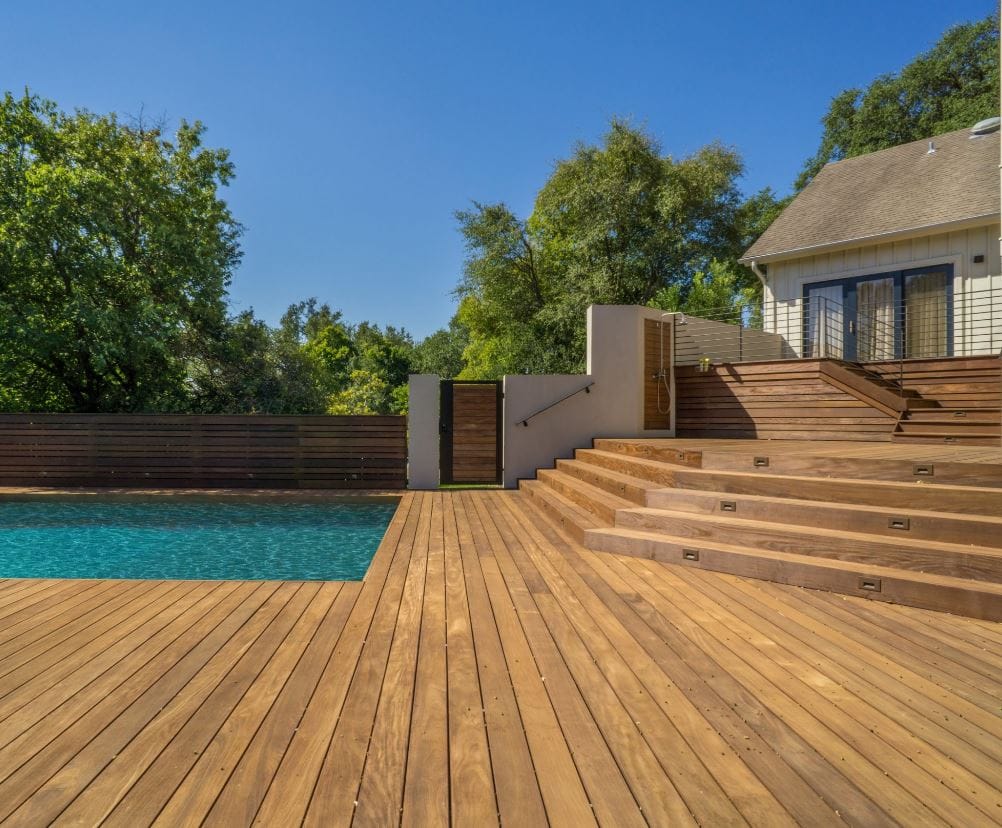
Ipe (pronounced E-pay) is arguably the world’s most beautiful hardwood. With a Janka hardness rating over 3,600—four times harder than Teak—it is naturally resistant to rot, insects, and scratches.
However, even the “Ironwood” faces one enemy: UV radiation.
If you have an Ipe deck, you have likely noticed it shifting from a rich chocolate brown to a silver-gray patina. While some homeowners love the weathered look, others want to maintain that warm, honeyed glow.
In this guide, we will walk through exactly how to clean Ipe decking and lock in its color for years.
Why Ipe Requires a Different Approach Than Pine or Cedar
Before grabbing a pressure washer or bleach, understand this: Ipe is dense. It does not absorb liquids easily. This is great for durability, but terrible for applying cleaners or oils if you don’t prep the surface correctly.
If you apply sealer to dirty or previously oiled wood, you will trap dirt beneath the surface, resulting in a blotchy, peeling mess.
Step 1: The “Water Break” Test
Before cleaning, determine if your deck needs oil or just a wash.
- Pour a glass of water onto the deck boards.
- If the water beads up, the previous oil coat is still active. You simply need to clean it.
- If the water soaks in immediately (turns dark), the wood is dry and unprotected. It is time to strip and re-oil.
How to Clean Ipe Decking: 3 Methods Compared
There are three primary ways to clean Ipe. Do not use generic deck cleaner from the hardware store unless it specifies “Oxalic Acid” or “Wood Brightener.”
| Method | Best For | Pros | Cons |
|---|---|---|---|
| 1. Oxygenated Bleach | Regular maintenance / Light graying | Eco-friendly; Won’t kill plants; No damage to wood fibers | Won’t remove heavy oxidation or old sealer |
| 2. Oxalic Acid Cleaner | Restoration (Gray to Brown) | Removes UV gray stains; Brightens wood | Requires neutralization; Safety gear required |
| 3. Soda Blasting | Severe neglect / Commercial jobs | Strips everything; Even finish; No sanding required | Expensive; Must hire a pro |
Method A: Gentle Cleaning (Routine Dirt)
If your deck is just dusty or has pollen buildup:
- Sweep the deck thoroughly.
- Mix oxygenated bleach (powder) with warm water.
- Apply with a soft nylon brush. Never use a wire brush; it will scratch Ipe.
- Scrub with the grain, rinse with a garden hose.
- Note: Do not use a pressure washer at this stage unless absolutely necessary.
Method B: Heavy Restoration (Bringing Back Color)
If your Ipe is solid gray, you need to remove the dead wood fibers to reveal the fresh brown wood underneath.
- Strip: Use a heavy-duty Ipe stripper (specifically for hardwoods).
- Brighten: After rinsing the stripper, apply an Oxalic Acid brightener. This chemically reverses the gray color.
- Rinse: Pressure wash at low pressure (500-800 PSI) holding the tip at a 45-degree angle. Keep the nozzle moving—do not stall.
The #1 Mistake: Over-Oiling
Ipe does not need oil to prevent rot; it needs oil to prevent UV graying.
There is a massive difference between film-forming sealers and penetrating oils:
| Feature | Film-Forming Sealers | Penetrating Oils (Semi-Transparent) |
|---|---|---|
| Appearance | Plastic-like; Thick | Natural; “Wet” look |
| Peeling Risk | High (Ipe expands/contracts) | None |
| Application | Difficult on Ipe | Easy |
| Re-coating | Must strip completely | Clean and recoat |
Winner: Always use a penetrating oil specifically labeled “Ipe Oil,” or a hardwax oil. These soak into the dense grain rather than sitting on top.
Step-by-Step: How to Apply Ipe Oil
1. Prep is 90% of the Job
Ensure the wood is bone dry. If you pressure washed yesterday, wait 24–48 hours. Ipe holds water deep inside, and if you seal it while wet, the water will try to escape and push the oil off.
2. Mask the Edges
Ipe oil is sticky. Use painter’s tape to protect house siding, glass doors, and aluminum railings.
3. Application Tools
- Pad Applicator: Best for large field areas (leaves no streaks).
- Brush: Best for edges and grooves (back-brush the pad lines to ensure even coating).
4. The Two-Coat Rule
- First Coat: Apply liberally. Let it sit for 15–20 minutes. Ipe is so dense it will look wet for a while. Wipe off all excess with a dry rag. If you leave puddles, they will dry into hard spots.
- Second Coat: Wait 2–4 hours (or per manufacturer instructions). Apply a thin second coat, again wiping away excess.
5. Cure Time
Keep furniture off the deck for at least 24 hours. Keep it dry for 24 hours.
Maintenance Schedule for Ipe Decking
To maximize the lifespan of your finish, follow this seasonal guide:
| Frequency | Task | Product Type |
|---|---|---|
| Weekly | Sweep leaves/debris | Broom |
| Monthly | Hose off pollen/bird droppings | Water only |
| Bi-Annually | Deep clean & Brighten | Oxygenated Bleach / Wood Brightener |
| Every 12–18 Months | Re-oil (If water soaks in) | Ipe Hardwood Oil |
FAQs: Ipe Deck Maintenance
Q: Can I use vinegar to clean Ipe?
A: No. Vinegar is acidic and can break down the lignin in the wood over time. Stick to pH-neutral soaps or oxygenated bleach.
Q: My sealer is peeling. What do I do?
A: This happens when a film-forming sealer was used. Unfortunately, you cannot just re-coat. You must sand or strip the deck entirely back to raw wood and restart with a penetrating oil.
Q: How do I prevent black water stains?
A: Ipe contains natural oils that can leach out if water sits for weeks. Place mats under planters and BBQ grills. Lift furniture regularly to allow airflow.
Final Verdict: Is it Worth It?
Maintaining Ipe is not difficult, but it is different. If you treat it like pressure-treated pine, you will ruin the finish.
The Golden Rule: Clean it bright, oil it thin, and wipe it dry.