How to Clean a Paella Pan: The Ultimate Guide for Carbon Steel & Stainless Steel
Meta Description: Learn the correct way to clean a paella pan without ruining the seasoning. Step-by-step methods for carbon steel, stainless steel, and non-stick pans. Avoid rust and stickiness.
A paella pan (paellera) is the heart of Spanish cooking. However, improper cleaning is the #1 reason these pans end up in the trash. Unlike regular frying pans, paella pans are typically made of carbon steel (which rusts easily) or stainless steel (which requires different care).
In this guide, you will learn:
- How to identify your pan type.
- The 3-step cleaning process for carbon steel.
- How to clean stubborn burnt rice (socarrat).
- A comparison of cleaning methods.
- How to dry and store to prevent rust.
Step 1: Identify Your Paella Pan Material
Before cleaning, check your pan. Using the wrong method will destroy it.
| Material | Characteristics | Rust Risk | Cleaning Difficulty |
|---|---|---|---|
| Carbon Steel | Dark grey, heavy, requires seasoning | High | Medium |
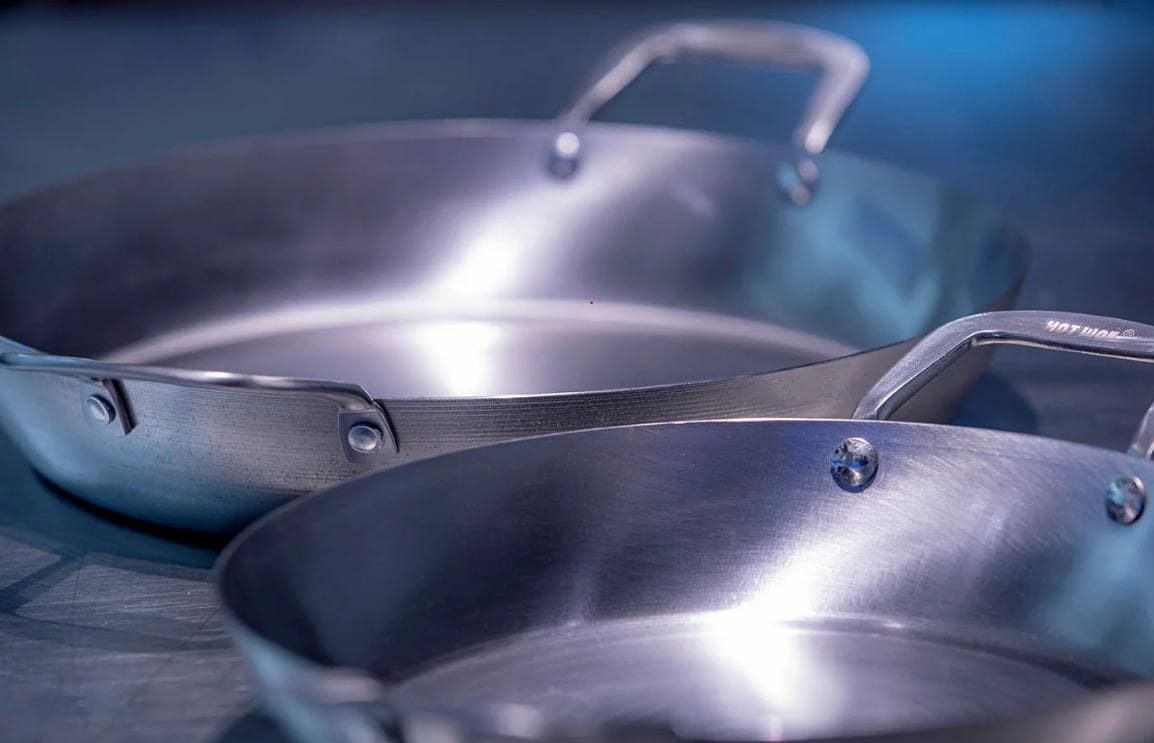
| Stainless Steel | Silver, shiny, no seasoning needed | Low | High (burns stick) |
| Non-Stick | Black coating, lightweight | None | Easy |
| Enameled | Colored ceramic coating | None | Easy |
Critical: Do NOT put a carbon steel paella pan in the dishwasher. It will rust instantly.
Step 2: How to Clean a Carbon Steel Paella Pan (Traditional)
This is the most authentic material. It develops a natural non-stick patina over time.
What You Need:
- Hot water
- Soft sponge or non-scratch pad
- Table salt (coarse kosher salt works best)
- Paper towels
- Neutral oil (grapeseed or vegetable)
The 3-Step Process:
| Step | Action | Why |
|---|---|---|
| 1. Cool Down | Let the pan cool to warm (not hot). | Rapid cooling warps carbon steel. |
| 2. Scrub with Salt | Pour ½ cup coarse salt + a little water to make a paste. Scrub gently. | Salt acts as an abrasive without stripping seasoning. |
| 3. Rinse & Dry | Rinse with hot water. Dry immediately with a towel + 2 minutes on low heat. | Any moisture = rust. |
To remove stuck socarrat (burnt rice crust):
- Add 1 cup of water to the pan.
- Simmer on low heat for 5 minutes.
- Scrape gently with a wooden spatula.
- Follow the salt scrub above.
After Cleaning: Re-Season (Every 3-4 uses)
- Rub 1 teaspoon of oil over the entire interior.
- Wipe it as if you want to remove it (thin layer only).
- Heat on medium until it smokes slightly.
- Turn off heat and let cool.
Step 3: How to Clean Stainless Steel Paella Pans
Stainless steel is more forgiving but prone to rainbow discoloration and stubborn burned patches.
Method Comparison:
| Problem | Solution | Time Required |
|---|---|---|
| Normal food residue | Soap + hot water + soft sponge | 2 min |
| Burnt black spots | Simmer vinegar + water (1:1) for 10 min | 15 min |
| Rainbow stains | Wipe with white vinegar or lemon juice | 1 min |
| Stubborn carbon | Make a paste of baking soda + hydrogen peroxide | Overnight |
Step-by-step for burnt stains:
- Fill pan with 1 inch of water + ½ cup white vinegar.
- Boil for 10 minutes. Water will turn brown.
- Discard liquid. Scrub with baking soda paste.
- Rinse and dry thoroughly.
Note: You can use mild dish soap on stainless steel without worry.
Step 4: Cleaning Non-Stick & Enameled Pans
These are the easiest but most delicate.
| Allowed | Not Allowed |
|---|---|
| Soft sponge, dish soap | Steel wool, metal scrapers |
| Nylon scrubbers | Abrasive powders (Bar Keepers Friend) |
| Cool water rinse | Dishwasher (for most non-stick) |
Cleaning routine:
- Let cool completely.
- Wash with warm soapy water and a soft sponge.
- Dry with a towel (no heat-drying needed).
Step 5: Drying & Storage (Prevent Rust Forever)
For carbon steel, drying is more important than cleaning.
- Towel dry immediately.
- Heat dry on stove for 2 minutes (medium heat).
- Oil wipe (thin layer) before storing.
Storage Comparison Table:
| Storage Method | Best For | Avoid For |
|---|---|---|
| Hanging on a rack | Carbon steel, stainless | Non-stick (scratch risk) |
| Stacked with paper towel between pans | All types | None |
| In a cabinet with a lid off | Enameled | Carbon steel (traps moisture) |
Pro tip: Never store food in a carbon steel paella pan. Acidic leftovers (tomato, lemon) will strip the seasoning and cause metallic tastes.
Common Mistakes to Avoid
| Mistake | Consequence | Correct Action |
|---|---|---|
| Using dish soap on carbon steel | Removes seasoning | Use only salt + water |
| Soaking overnight | Rust | Never soak > 10 min |
| Scrubbing with steel wool | Scratches patina | Use bamboo brush or salt |
| Putting wet pan away | Rust pitting | Heat-dry immediately |
FAQ: Quick Answers
Can I use soap on a paella pan?
- Carbon steel: No (except for deep cleaning once a year).
- Stainless steel / Non-stick: Yes.
My pan turned black. Is it ruined?
No. Carbon steel naturally darkens. That’s the seasoning layer—it’s good.
How do I remove rust?
Mix vinegar + water (1:1). Scrub with steel wool (only if rusted). Then re-season immediately.
Can I clean a cold paella pan?
Yes, but warm (not hot) is easier for carbon steel. Hot water on a cold carbon steel pan can cause warping.
Final Verdict: Best Cleaning Method by Pan Type
| Pan Type | Best Daily Method | Best for Burnt Food |
|---|---|---|
| Carbon Steel | Hot water + salt scrub + heat dry | Simmer water, then salt scrub |
| Stainless Steel | Soap + sponge | Boil vinegar/water + baking soda |
| Non-Stick | Soap + soft sponge | Simmer soapy water, then wipe |
| Enameled | Soap + soft sponge | Boil baking soda solution |
Conclusion
Cleaning a paella pan correctly takes 3 minutes but extends the life of your pan by decades. Remember: For carbon steel, think of it like cast iron—no soap, dry on heat, oil after. For stainless steel, scrub hard but avoid steel wool.
Now go make another paella. The socarrat (crispy rice bottom) is worth the cleaning effort.