Borax and Bees: A Comprehensive Guide to Effective Control
The gentle hum of bees is a sound of a healthy ecosystem. However, when these vital pollinators decide to build a hive too close to your home—in your siding, attic, or underground in your yard—they can become a legitimate concern. While professional removal is always the safest option, many homeowners seek DIY solutions, and borax often comes up in these discussions.
This article provides a detailed, responsible guide on the relationship between borax and bees, how it can be used for control, and the critical safety considerations you must know.
Understanding the Threat: Why Borax Works on Bees
Bees are not like ants or cockroaches; they are beneficial insects facing global population declines. Before considering any form of control, always confirm you are dealing with honey bees and not more aggressive wasps or hornets. If they are honey bees, contact a local beekeeper for safe, live removal.
Borax, also known as sodium borate, is a naturally occurring mineral powder. For insects, it acts as a stomach poison and a desiccant (drying agent). When bees come into contact with borax, either by ingesting it or carrying it back to the hive, it disrupts their digestive system and gradually leads to dehydration and death.
Expert Insight: “Borax is a slow-acting poison for social insects. Its true effectiveness comes from the ‘trojan horse’ effect. Forager bees inadvertently carry the powder back to the central nest, contaminating the food supply and the larvae, leading to a collapse of the colony over days or weeks.” – Pest Control Principles, University of Florida IFAS Extension
How to Use Borax to Get Rid of Bees: A Step-by-Step Guide
Important Disclaimer: Using borax to eliminate bees is a last-resort measure for situations where the nest poses an immediate danger and professional help is unavailable. Always prioritize non-lethal removal methods first. Wear full protective clothing (suit, gloves, veil) to avoid stings.
Method 1: Borax Sugar Bait
This method targets the bees’ foraging instinct.
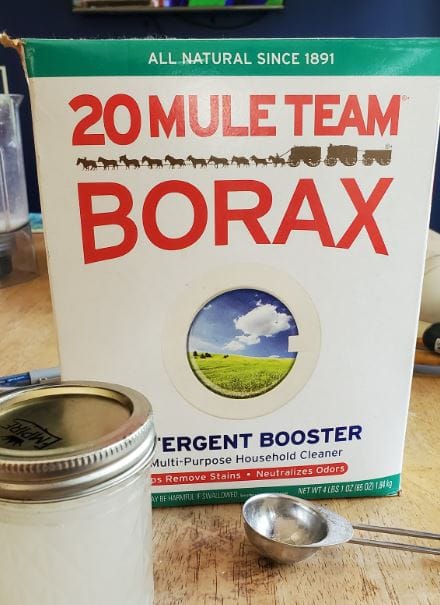
- Create the Bait: Mix three parts sugar with one part borax. For example, 3/4 cup of sugar with 1/4 cup of 20 Mule Team Borax. The high sugar content attracts the bees, ensuring they consume and carry the borax.
- Add a Liquid Carrier: Add a small amount of water or honey to the mixture to create a thick, paste-like consistency. This makes it easier for the bees to collect.
- Place the Bait Stations: Put small amounts of the bait on shallow lids or plates. Place these stations near the bee hive entrance or along their common flight paths.
- Monitor and Replenish: Check the stations daily. It may take several days to a week to see a significant reduction in bee activity.
Method 2: Direct Dusting for Ground Nests
This is for yellow jackets or other wasps that nest in the ground.
- Identify the Entrance: Locate the main hole of the ground nest during the day.
- Apply at Dusk or Dawn: Approach the nest at night when the insects are less active. Using a hand duster or a bottle with a narrow applicator, puff a generous amount of pure borax powder directly into the nest entrance.
- Block the Entrance: Quickly cover the entrance with a large, heavy rock or sod to trap the borax inside and prevent escape.
Borax vs. Other Common Bee Control Methods
The table below compares borax with other popular DIY and professional bee control strategies.
| Method | How It Works | Pros | Cons | Best For |
|---|---|---|---|---|
| Borax Bait | Ingested poison carried back to the nest. | – Inexpensive – Readily available – Effective over time | – Slow acting (days/weeks) – Non-target species risk – Harmful to ecosystem | Last-resort for inaccessible hives. |
| Soap & Water Spray | Clogs spiracles (breathing tubes), suffocating insects. | – Fast-acting on contact – Non-toxic to pets after drying – Biodegradable | – Requires direct contact – May not kill entire colony – Can agitate bees | Small, visible aerial nests (wasp/hornet). |
| Professional Exterminator | Uses potent, regulated insecticides. | – Fast, guaranteed results – Handles any nest size/location – Safety expertise | – Most expensive option – Uses harsh chemicals | Large, dangerous, or hard-to-reach infestations. |
| Live Bee Removal | Physically relocates hive and colony. | – Eco-friendly, preserves bees – Solves the problem at the source | – Can be costly – Not all beekeepers offer this service | Honey bee swarms or established hives. |
Critical Warnings and Ethical Considerations
Before you reach for the borax, consider these vital points:
- Honey Bee Protection: In many places, honey bees are protected by law due to their critical role in pollination. Always attempt to contact a local beekeeper or bee removal service first. They can often relocate the hive without killing the colony.
- Environmental Impact: Borax is not a selective poison. It can harm other beneficial insects, like butterflies and ladybugs, if they come into contact with the bait. It can also be toxic to pets and children if ingested in large quantities.
- Ineffectiveness on the Queen: The queen bee rarely leaves the hive. For a bait to be completely effective, it must be transported deep into the nest by worker bees to eventually reach and kill the queen, which is not always guaranteed.
- Potential for Agitation: Incorrect application can agitate the bees, making them more aggressive and increasing the risk of stings.
The Final Verdict: Is Borax the Right Choice?
Borax can be an effective, low-cost method to eliminate a problematic bee or wasp colony. However, its use comes with significant ethical and environmental trade-offs.
The responsible approach is a stepped one:
- Identify: Confirm the insect species.
- Tolerate: If the nest is not in a high-traffic area, consider leaving it alone until the season ends.
- Relocate: For honey bees, always call a beekeeper.
- Control: If elimination is the only option, consider soapy water for immediate, small nests.
- Eliminate (Last Resort): Use a borax bait for large, persistent, or inaccessible colonies where other methods have failed, and always with extreme caution.