How to Clean a Couch with Vinegar: A Safe, Step-by-Step Guide

Quick Answer: White vinegar is a safe, effective cleaner for most W and WS coded upholstery fabrics when diluted with water. Mix one part white vinegar with two to three parts water, spot test in a hidden area, then lightly mist and blot—never soak—the fabric. Vinegar excels at neutralizing odors and lifting light stains, but it is not suitable for S or X coded fabrics, leather, silk, or velvet.
Why White Vinegar Works on Upholstery
White vinegar is a mildly acidic solution, typically containing about 5% acetic acid. This acidity gives it several useful cleaning properties for fabric couches:
- Breaks down light grime and oils: The acid dissolves residue that accumulates from everyday use, including body oils and food particles.
- Neutralizes odors: Vinegar reacts with odor-causing compounds (particularly amines found in pet accidents and musty smells) to form odorless salts. It eliminates the smell rather than masking it.
- Leaves no harsh chemical residue: Unlike many commercial upholstery cleaners, diluted vinegar does not leave behind detergent films that can attract new dirt.
However, vinegar’s acidity is also its primary risk. It can damage certain dyes, weaken delicate natural fibers, and cause water rings on solvent-only fabrics. The sections below explain how to determine whether your couch is a candidate for vinegar cleaning.
Step 0: Check Your Couch’s Cleaning Code First
Before mixing any solution, locate the care tag—usually sewn under a seat cushion or stapled to the frame’s underside. The code determines whether vinegar is safe.
If the tag is missing: Treat the couch as sensitive and rely on a patch test before proceeding. If the patch test fails, do not use vinegar.
Materials to avoid regardless of code:
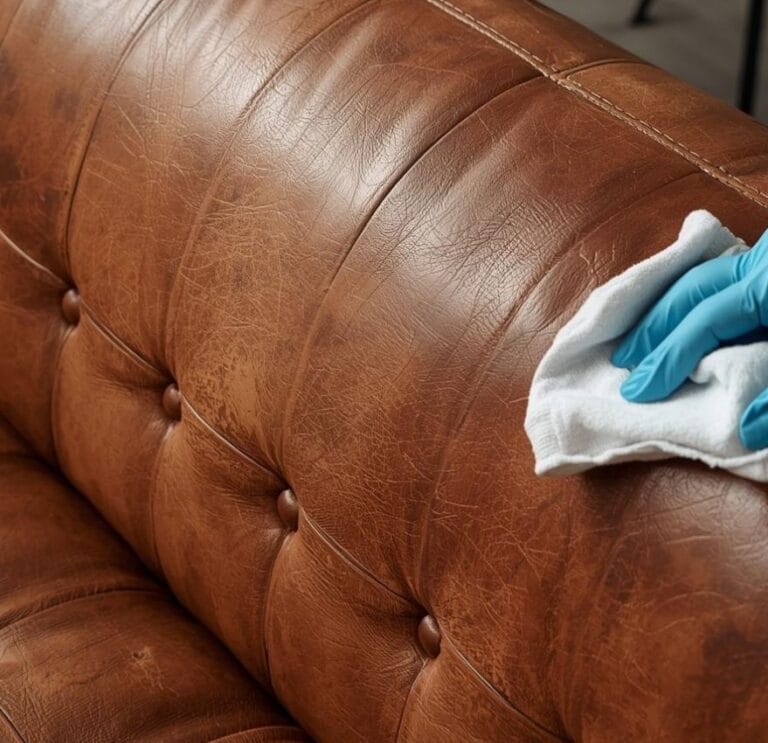
- Leather and suede (vinegar can dry and crack them)
- Silk and rayon (prone to water spotting)
- Velvet and pile fabrics (crush and shade when wet)
What You’ll Need
Gather these supplies before starting. Most are likely already in your home.
The Complete Cleaning Process
Step 1: Vacuum the Entire Couch Thoroughly
Remove all cushions and vacuum every surface using the upholstery attachment. Pay close attention to:
- Crevices between cushions and the frame
- Under the cushions
- Seams and folds where crumbs and pet hair accumulate
Why this matters: If you skip vacuuming, you’ll push loose dirt deeper into the fabric when it gets wet, essentially creating mud.
Step 2: Mix Your Vinegar Solution
For most W and WS fabrics, use this ratio:
1 part white vinegar : 2 to 3 parts water
Pour into a spray bottle and shake to combine. Warm water helps the vinegar work more effectively, but avoid hot water, which can set certain stains.
For heavier soil or grease: Add a few drops of mild dish soap to the mixture. One recommended ratio is ¼ cup vinegar, ¾ cup warm water, and ½ tablespoon dish soap.
Start weaker: Begin with the 1:3 ratio. You can always increase vinegar concentration if the fabric handles it well and the stain persists.
Step 3: Perform a Patch Test (Non-Negotiable)
Spray a small amount of solution on a hidden area—the back of a cushion, underside of an arm, or behind the couch.
Wait at least 10 minutes (ideally until fully dry), then blot and inspect for:
If anything looks wrong, stop. Do not proceed to visible areas.
Step 4: Apply and Blot—Do Not Soak
Work in small sections, about the size of one cushion at a time.
- Lightly mist the fabric. It should be damp, not dripping wet. Oversaturation can damage padding and promote mildew.
- Let sit for 3–5 minutes to allow the acid to break down grime.
- Blot firmly with a clean microfiber cloth. Use a dabbing motion, not rubbing. Rubbing damages fibers and spreads stains deeper.
- Work from outside toward the center of stains to prevent spreading.
- Switch to a clean part of the cloth frequently as it picks up soil.
Step 5: Rinse and Dry
After treating each section:
- Dampen a second clean cloth with plain water and blot the area to remove residual vinegar.
- Press a dry towel onto the area to absorb excess moisture.
- Allow to air dry completely with windows open or a fan running. Keep people and pets off the couch until dry.
How to Deodorize Couch Cushions with Vinegar
For musty or heavily soiled cushions, vinegar can penetrate deeper than surface spraying allows. The trash bag method compresses the cushion and forces the solution into the filling:
- Remove the cushion and spray it thoroughly with a 1:1 vinegar-water solution.
- Place the cushion inside a large trash bag.
- Insert your vacuum hose into the bag, hold the bag closed around the hose, and turn the vacuum on to remove all air.
- Seal the bag tightly while still deflated.
- Let sit for 4–5 hours.
- Remove the cushion and allow it to dry completely before replacing it.
This method works because the vacuum compression forces the vinegar deep into the cushion where odor-causing compounds reside.
Vinegar vs. Commercial Upholstery Cleaners: A Comparison
Bottom line: Vinegar is an excellent choice for maintenance cleaning and odor control on compatible fabrics. For deep-set stains, heavy grease, or delicate materials, a professional service or specialized cleaner may be necessary.
What Vinegar Does Not Do Well
Vinegar has real limitations. Do not expect it to:
- Remove oily or greasy stains: The acid does not break down fats effectively.
- Lift old, set-in stains: Once a stain has bonded with the fibers over time, vinegar alone won’t release it.
- Clean deep into cushion foam: Surface spraying cannot reach odor sources trapped in the filling—the trash bag method helps, but severe pet contamination may require enzyme cleaners.
- Work on all fabrics: As detailed above, S and X coded fabrics, leather, silk, and velvet should never be treated with vinegar.
Never combine vinegar with bleach or bleach-containing products. The reaction releases chlorine gas, which is toxic to breathe.
Maintenance Schedule
When to Call a Professional
Stop DIY cleaning and seek professional help if:
- The patch test changes the fabric’s appearance or texture
- Water rings appear as the fabric dries
- The stain is oily, older than a few days, or covers a large area
- The cushion is wet through (moisture has reached the foam)
- You see signs of mold or mildew under the cushions
Professional upholstery cleaning typically costs $80–$150 depending on the service and your location, but it can extend your couch’s lifespan significantly by removing deep-seated soil that household methods cannot reach.
Summary
Cleaning a couch with vinegar is a practical, low-cost approach for W and WS coded fabrics when done correctly. The essential rules are: check the code first, dilute properly (1:2 to 1:3 vinegar to water), patch test, mist lightly, blot—never rub—and dry thoroughly. Vinegar shines at odor neutralization and light maintenance cleaning, but it is not a universal solution. For heavy stains, delicate materials, or deep odor problems, a professional cleaner remains the safer and more effective option.