How to Keep Ammonia Levels Down in Your Fish Tank
For every aquarist, from beginner to expert, the mention of “ammonia” sends a shiver down the spine. It is the number one cause of fish loss, especially in new tanks, but it can strike established aquariums without warning. Ammonia poisoning is swift and deadly, but the good news is that it is entirely preventable and manageable.
This comprehensive guide will walk you through everything you need to know about ammonia: what it is, why it’s so dangerous, and, most importantly, a step-by-step action plan on how to keep ammonia levels down in your fish tank for good.
What is Ammonia and Why is it So Dangerous?
Ammonia (NH₃) is a toxic nitrogenous waste product that primarily comes from fish waste (urine and feces) and the decomposition of uneaten food and dead plant matter. It is a natural byproduct of life in your tank.
The danger lies in its chemical properties. Ammonia interferes with fish’s ability to regulate fluids and salts in their bodies and damages their gills and internal tissues. Even low levels can cause chronic stress, suppressing their immune systems and making them susceptible to disease. High levels lead to rapid death.
Expert Quote: “Think of ammonia like carbon monoxide for humans—it’s invisible, it’s tasteless, but it actively suffocates your fish from the inside out. A well-maintained tank should always read 0 ppm (parts per million) ammonia on a liquid test kit.” – Marine Biologist and Aquarium Consultant, Dr. Sarah Jenkins

The Root Causes of High Ammonia Levels
Understanding the source of ammonia is the first step to controlling it. The main culprits are:
- New Tank Syndrome: In a new aquarium, the colony of beneficial bacteria that convert ammonia into less harmful substances (nitrites, then nitrates) has not yet established. This process is known as the Nitrogen Cycle.
- Overstocking: Too many fish in a tank produce more waste than the biological filter can handle.
- Overfeeding: The single most common mistake. Uneaten food decays and produces a massive ammonia spike.
- Poor Maintenance: Infrequent water changes and dirty filters allow ammonia to accumulate.
- A Disrupted Filter: Cleaning filter media with tap water (which contains chlorine) or replacing all filter media at once can kill the beneficial bacteria, crashing your cycle.
- Medications and Chemicals: Some treatments can harm your beneficial bacteria.
- Dead Fish or Plant Matter: A decaying body left in the tank releases a large amount of ammonia very quickly.
Your Action Plan: How to Keep Ammonia Levels Down
Follow this multi-pronged approach to achieve and maintain a safe, ammonia-free aquarium.
1. Cycle Your Tank Properly (The Foundation)
This is non-negotiable. Before adding fish, you must establish the Nitrogen Cycle. This process cultivates nitrifying bacteria that consume ammonia.
- Fishless Cycling: The most humane and recommended method. You add a pure ammonia source (like household ammonia without surfactants) to the empty tank to feed the bacteria colony until it can process 2-4 ppm of ammonia into nitrate within 24 hours.
- Fish-In Cycling: A less ideal, stressful method where you add a few hardy fish and perform very frequent, small water changes to keep them alive while the cycle establishes. Not recommended for beginners.
2. Master the Art of Feeding
Overfeeding is a silent tank killer.
- Feed in Small Portions: Only give what your fish can consume completely within 1-2 minutes.
- Frequency: Once or twice a day is sufficient for most fish. Some species may require different schedules.
- Observe: If you see food settling on the substrate, you are feeding too much.
3. Perform Regular and Effective Water Changes
Water changes physically remove ammonia and other pollutants before they can concentrate.
- Frequency: A weekly water change of 15-25% is a good standard for a stable tank.
- Emergency Changes: For a detected ammonia spike (anything above 0.25 ppm), perform an immediate 25-50% water change.
- Always use a water conditioner that neutralizes chlorine and chloramines from tap water.
4. Don’t Overclean Your Filter
Your filter is the biological heart of your tank. Treat it with care.
- Rinse, Don’t Kill: When filter media gets clogged, rinse it in a bucket of water you’ve removed from the tank during a water change. Never use tap water, as the chlorine will decimate your bacteria.
- Stagger Media Changes: If you have multiple types of filter media, don’t replace them all at once. Replace one piece every few weeks to preserve the bacterial colony.
5. Avoid Overstocking
Research the adult size and bioload of every fish before you buy. A general rule is one inch of fish per gallon of water, but this is a rough guideline. When in doubt, err on the side of fewer fish.
6. Use Live Plants
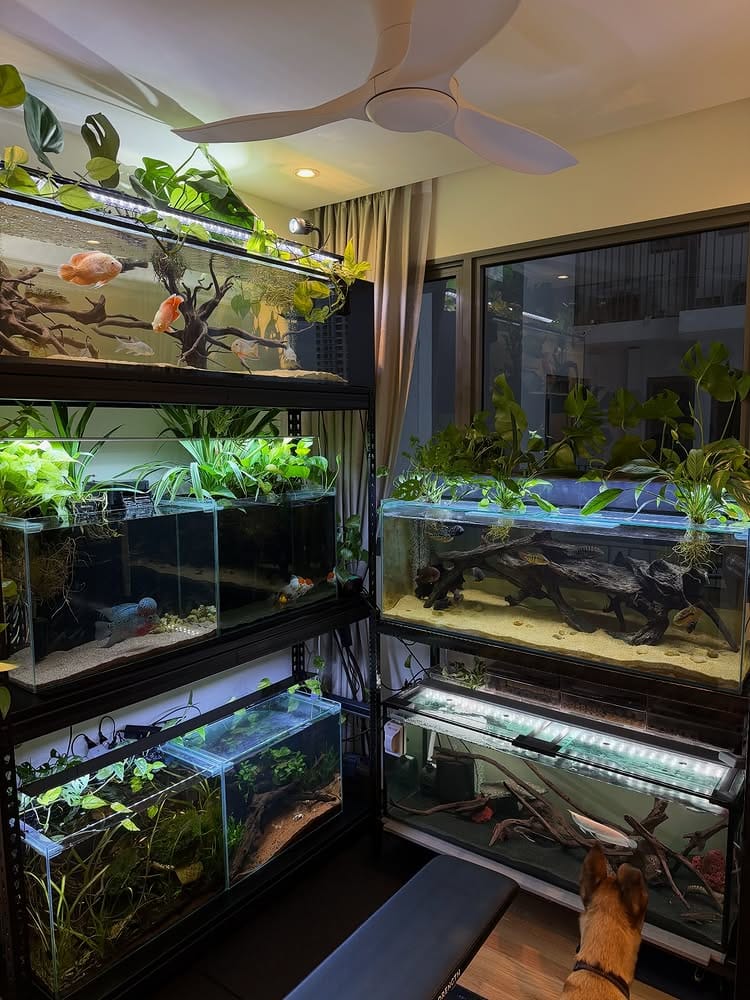
Live plants are nature’s filters. They absorb ammonia, nitrates, and phosphates directly from the water, using them as fertilizer. They are a beautiful and functional addition to any aquarium.
Emergency Response: What to Do During an Ammonia Spike
If your test kit reveals an ammonia level above 0.25 ppm, act fast:
- Immediate Water Change: Perform a 50% water change.
- Test Your Tap Water: Ensure your water source isn’t the problem (some tap water contains chloramines, which can break down into ammonia).
- Use a Chemical Neutralizer: Products like Seachem Prime are invaluable. They instantly detoxify ammonia (and nitrite), making it non-toxic to fish for up to 48 hours, giving you time to address the root cause.
- Stop Feeding: Withhold food for 24-48 hours to stop adding to the waste problem.
- Vacuum the Gravel: Remove any visible waste or decaying matter.
Ammonia Control Products: A Comparison Table
| Product Type | How It Works | Best Use Case | Example Products |
|---|---|---|---|
| Water Conditioner | Binds chlorine/chloramines; some detoxify ammonia. | Daily water changes & emergency spikes. | Seachem Prime, API Stress Coat |
| Beneficial Bacteria | Adds live nitrifying bacteria to the tank. | Jump-starting a new cycle or after a crash. | Tetra SafeStart, API Quick Start |
| Chemical Filtration | Adsorbs ammonia and other impurities from the water. | Polishing water, removing medications. | Zeolite, Activated Carbon |
| pH Lowerers | Reduces pH, converting toxic NH3 to less toxic NH4+. | Temporary emergency measure in high pH tanks. | Peat Moss, Driftwood, pH Down |
Prevention vs. Cure: A Quick-Reference Table
| Prevention Strategy | Emergency Cure |
|---|---|
| Properly cycle the tank before adding fish. | Perform a large (50%) water change. |
| Feed sparingly and remove uneaten food. | Stop feeding for 24-48 hours. |
| Perform weekly 15-25% water changes. | Use a chemical ammonia detoxifier (e.g., Seachem Prime). |
| Stock your tank responsibly. | Add a proven beneficial bacteria booster. |
| Maintain filter without killing bacteria. | Vacuum the substrate thoroughly. |
Expert Quote: “An ounce of prevention is worth a pound of cure, and this is never truer than in aquarium keeping. A consistent, simple maintenance routine is far easier and less stressful than frantic emergency measures to save your fish’s lives.” – Robert Farrell, Author of ‘The Informed Aquarist’
Conclusion: Consistency is Key
Keeping ammonia levels down in your fish tank is not about a single magic bullet; it’s about consistent, proper husbandry. By understanding the nitrogen cycle, feeding responsibly, performing regular maintenance, and stocking wisely, you create a stable, thriving ecosystem where ammonia is a non-issue. Invest in a reliable liquid test kit, test your water weekly, and enjoy the peace of mind that comes with a healthy, beautiful aquarium.