Can Windex Kill Ants? The Surprising Truth and Better Solutions

If you’ve ever spotted a trail of ants marching across your kitchen counter, you’ve likely reached for the nearest spray bottle in a moment of panic. For many, that bottle is Windex. But does this common household cleaner actually work as an impromptu insecticide? The answer is more complex than a simple yes or no.
This article will break down the science behind Windex and ants, compare its effectiveness to other methods, and provide you with smarter, long-term solutions for ant control.
The Immediate Effect: Does Windex Kill Ants on Contact?
Yes, Windex can kill ants on contact, but it is not an insecticide.
The primary reason Windex is effective at dispatching individual ants is suffocation. Ants breathe through tiny holes in their exoskeleton called spiracles. The surfactants (soapy components) and solvents in Windex break down the waxy coating on the ant’s exoskeleton and clog these spiracles, causing the ant to suffocate and die relatively quickly.
Quote: “Window cleaners like Windex contain solvents and surfactants that can break down an insect’s protective cuticle and block its airways, leading to rapid death through a process of suffocation and toxicity. However, it does nothing to address the root of the infestation.” – Entomology Insight
So, while a direct spray will eliminate the ants you can see, it’s a superficial victory.
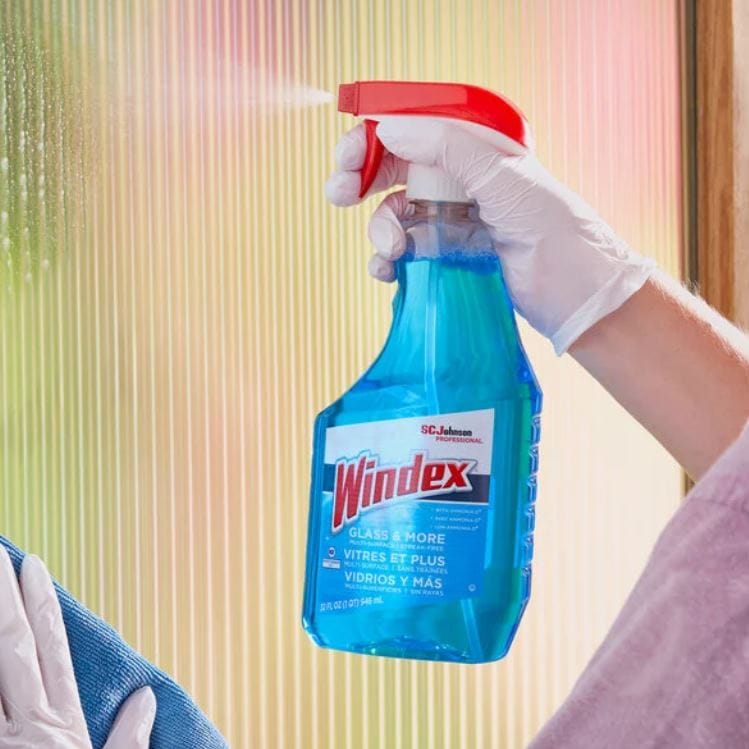
The Major Limitations of Using Windex for Ant Control
Using Windex might feel effective in the moment, but it comes with significant drawbacks that make it a poor choice for genuine pest control.
It Leaves No Residual Effect
Unlike professional ant baits and sprays, Windex leaves behind no active, long-lasting residue. Once you wipe the surface clean, any new ants can march across the same area completely unharmed. It does nothing to protect your home from future invaders.
It’s Ineffective Against the Colony
This is the most critical failure. An ant trail is merely the tip of the iceberg. It consists of worker ants foraging for food. The heart of the problem—the queen and the rest of the colony—is hidden safely in a nest, often outside or deep within your walls. Killing a few workers with Windex does nothing to harm the queen, who will simply produce more ants to replace them.
It Can Scatter the Problem
Spraying a trail of ants with a strong cleaner can disrupt their pheromone scent trail. While this might seem like a good thing, it can often backfire. Instead of eliminating the trail, it can cause the colony to splinter and send out scouts to find new, less obvious paths into your home, potentially making the infestation worse.
Windex vs. Dedicated Ant Killers: A Head-to-Head Comparison
The table below clearly illustrates why Windex is not a suitable replacement for proper ant control products.
| Feature | Windex & Glass Cleaners | Dedicated Ant Baits | Insecticide Sprays |
|---|---|---|---|
| Kills on Contact | Yes | No (Slow-acting) | Yes |
| Residual Effect | No | Yes (Carried into nest) | Yes (Lasts days/weeks) |
| Targets the Colony | No | Yes (Primary Strength) | Sometimes |
| Active Ingredient | Surfactants, Ammonia | Borax, Fipronil, Hydramethylnon | Pyrethroids, Lambda-cyhalothrin |
| How it Works | Suffocation | Poison is carried back to nest, fed to queen | Neurotoxin on contact/residual |
| Best For | A few visible ants | Eliminating the entire colony | Creating a protective barrier |
As the table shows, while Windex wins in a single, direct confrontation, it fails in the overall war against an infestation.
Better, More Effective Ways to Get Rid of Ants
For a problem that truly requires a solution, here are proven methods that target the entire colony, not just the scouts.
1. Ant Baits (The Gold Standard)
Ant baits are the most effective DIY solution. They work by combining a attractive food source with a slow-acting poison. Worker ants carry the poisoned bait back to the nest and share it with the queen, larvae, and other ants, ultimately eradicating the colony at its source.
Pro Tip: Place baits directly in the path of the ant trail and do not disturb them. It may take a few days to see results, but patience is key.
2. Diatomaceous Earth
This is a natural, non-toxic powder made from fossilized algae. It feels like soft powder to us, but to ants, it’s made of razor-sharp particles. It sticks to their exoskeleton, absorbing protective oils and fats and causing them to dehydrate and die. Sprinkle it in cracks, along baseboards, and other entry points.
3. Vinegar Solution
A 50/50 mix of white vinegar and water is excellent for disrupting pheromone trails. While it may not kill ants as quickly as Windex, it effectively erases their chemical roadmap, confusing the scouts and preventing them from leading others to food sources. It’s a great cleaning solution for after you’ve solved the infestation.
4. Professional Pest Control
For large, persistent, or carpenter ant infestations (which can cause structural damage), calling a licensed pest control professional is the most reliable and safe option.
The Final Verdict: Should You Use Windex on Ants?
Windex is a temporary, last-resort tool, not a solution.
It’s acceptable for quickly dispatching a handful of ants you see on a windowsill. However, relying on it for ant control is a flawed strategy. It fails to address the root cause—the hidden colony—and provides no lasting protection.
For a truly ant-free home, invest in targeted solutions like ant baits and diatomaceous earth that are designed to solve the problem, not just mask it. Your goal shouldn’t be to kill the ants you see, but to ensure you never see them in the first place.